


NovaStar MX40 Pro 4K LED Controller | 20 Ethernet Ports
The NovaStar MX40 Pro is a COEX 4K LED display controller with 20 Gigabit Ethernet outputs and four 10G optical interfaces. HDMI 2.0, DP 1.2 and 12G-SDI inputs support professional video sources, while VMP provides screen configuration and device control.
Contact sales for specific pricing.
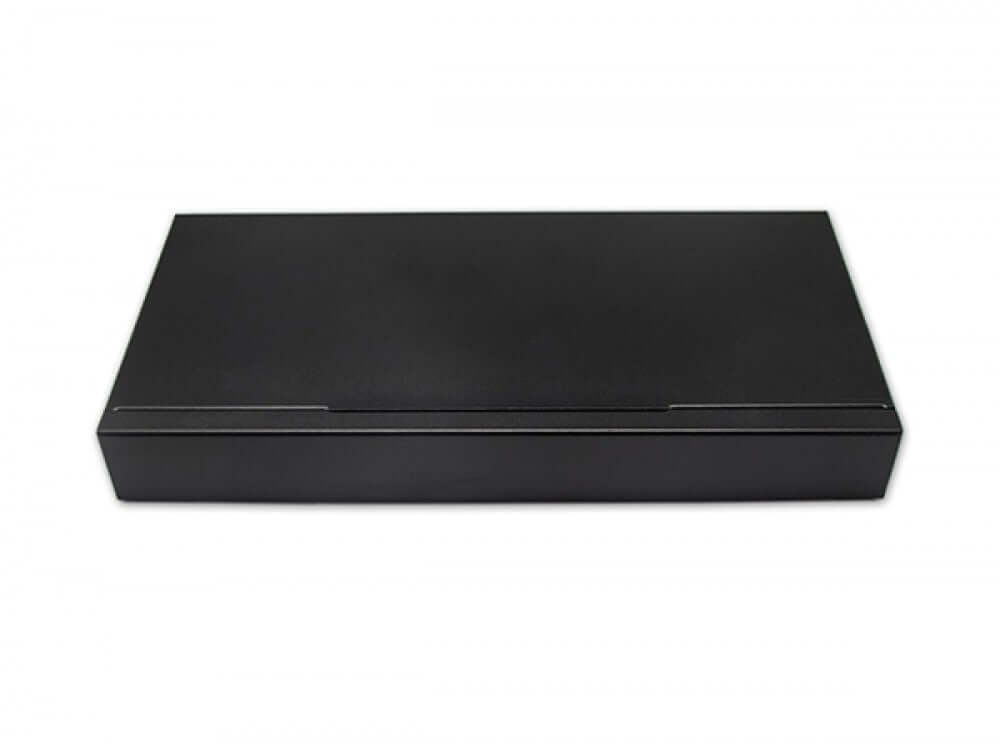
NovaStar MX40 Pro COEX 4K LED display controller
The MX40 Pro connects HDMI, DisplayPort and SDI video sources to an LED display through 20 Gigabit Ethernet outputs or 10G fiber interfaces. It uses NovaStar VMP, the Vision Management Platform, for display configuration and device management, including control of multiple cascaded units.
Its input options suit systems that need 4K sources, Genlock and a configurable screen data path. Match the source format and receiving cards before choosing the bit depth, HDR or 3D settings.
Input and output specifications
These values follow the original Chinese specification linked below, revision V1.0_03. Interface formats and feature availability should be checked against that document and the supplied unit.
| Parameter | Specification |
|---|---|
| Inputs | 2 × HDMI 2.0 with loop outputs; 1 × DP 1.2; 1 × 12G-SDI with loop output |
| 4K input example | HDMI 2.0 and DP 1.2: 4096 × 2160 @ 60 Hz at 8-bit; 12G-SDI: 4096 × 2160 @ 60 Hz, 10-bit YCbCr 4:2:2 |
| High-bit-depth formats | HDMI 2.0-1 and DP 1.2 list 8/10/12-bit formats; HDMI 2.0-2 lists 8/10-bit in this revision. At 10/12-bit, resolution and rate depend on chroma sampling. |
| LED data outputs | 20 × Neutrik Gigabit Ethernet ports; Ethernet-port redundancy supported |
| Optical interfaces | 4 × 10G optical interfaces |
| Optical data mapping | OPT1 carries Ethernet ports 1–10; OPT2 carries ports 11–20. In copy mode, OPT3 copies OPT1/ports 1–10 and OPT4 copies OPT2/ports 11–20. |
| Synchronization | Genlock IN and LOOP; Bi-Level, Tri-Level and Black burst supported |
| Control | VMP software; 2 Ethernet control ports; up to 10 MX40 Pro units cascaded for unified control |
| HDR | HDR10 and HLG; compatible receiving cards required for the documented HDMI 10-bit HDR workflow |
| Low latency | Less than 1 ms at the sending-card end as stated in this revision; additional delay can be introduced when needed |
| 3D | Requires a 3D-capable receiving card, EMT200 emitter and 3D glasses; enabling 3D halves load capacity |
| AC input | 100–240 V~, 50/60 Hz, 2 A |
| Maximum power consumption | 70 W |
| Operating environment | −20 to +60 °C; 0–80% RH, non-condensing |
| Dimensions | 482.6 × 94.2 × 467.0 mm |
| Protection rating | IP20 |
Color, grayscale and receiver compatibility
The documented image-quality functions include color management, fine grayscale and 22bit+, with results dependent on the driver IC. Full-grayscale and pixel-level brightness/chroma calibration help align the display across different brightness levels when used with the appropriate calibration system.
The specification also describes a dynamic engine for contrast and screen-power control. Treat these as system features: verify the receiving-card and driver-IC combination for the intended display. The A10s Pro is specifically identified for reducing the loss of load capacity at 10-bit compared with a halving of the load.
Choosing the video format
For HDMI 2.0-1 and DP 1.2, the linked revision lists 4096 × 2160 at 60 Hz for 8-bit sources. At 10/12-bit RGB or YCbCr 4:4:4 it lists 4096 × 2160 at 30 Hz or 4096 × 1080 at 60 Hz; YCbCr 4:2:2 can retain 4096 × 2160 at 60 Hz. The complete source-format table is in the PDF.
Optical copy channels duplicate the existing output data. They should not be counted as additional independent screen capacity. The Ethernet control ports are separate from the 20 LED data outputs.
Frequently Asked Questions
What software is used with the NovaStar MX40 Pro?
Use NovaStar VMP, the Vision Management Platform, for display configuration and device control. The linked specification supports Ethernet cascading of up to 10 MX40 Pro units for unified control.
Does the MX40 Pro accept 4K at 60 Hz?
Yes, with a supported input format. HDMI 2.0 and DP 1.2 support 4096 × 2160 at 60 Hz at 8-bit, and 12G-SDI supports that format at 10-bit YCbCr 4:2:2. Higher-bit-depth HDMI/DP formats must be checked against the source-format table.
Do OPT3 and OPT4 provide extra screen capacity?
In the documented optical copy mode, OPT3 duplicates OPT1 or Ethernet ports 1–10, and OPT4 duplicates OPT2 or ports 11–20. These are duplicated signals, not extra independent output groups.
Can the MX40 Pro display HDR video?
It supports HDR10 and HLG. The linked specification describes HDMI 10-bit HDR operation with an HDR-capable receiving card, so confirm receiving-card compatibility as part of the screen configuration.
What is required for 3D on the MX40 Pro?
The documented setup requires a receiving card that supports 3D, an EMT200 3D emitter and 3D glasses. Enabling 3D halves the load capacity, which must be included in output planning.
Product video and images


Specification download
| Weight | 19 kg |
|---|
Be the first to review “NovaStar MX40 Pro 4K LED Controller | 20 Ethernet Ports”
You must be logged in to post a review.
Will I be charged with customs and taxes?
The prices displayed on our site are tax-free (in US Dollars), which means you may be required to pay import duties and taxes once you receive your order. Import taxes, duties, and related customs fees will be determined by your local customs office when your order arrives at its final destination.
Please note that these additional charges and taxes are your responsibility, and we do not take any responsibility for them. We are not liable for paying or reimbursing any customs duties, taxes, or related fees. For more details on these charges, please contact your local customs office.
Shipping
We can ship to virtually any address in the world. Note that there are restrictions on some products, and some products cannot be shipped to international destinations..
When you place an order, we will estimate shipping and delivery dates for you based on the availability of your items and the shipping options you choose. Depending on the shipping provider you choose, shipping date estimates may appear on the shipping quotes page.
Please also note that the shipping rates for many items we sell are weight-based. The weight of any such item can be found on its detail page. To reflect the policies of the shipping companies we use, all weights will be rounded up to the next full pound..
Returns Policy
You may return most new, unopened items within 30 days of delivery for a full refund. We'll also pay the return shipping costs if the return is a result of our error (you received an incorrect or defective item, etc.)..
You should expect to receive your refund within four weeks of giving your package to the return shipper, however, in many cases you will receive a refund more quickly. This time period includes the transit time for us to receive your return from the shipper (5 to 10 business days), the time it takes us to process your return once we receive it (3 to 5 business days), and the time it takes your bank to process our refund request (5 to 10 business days).
If you need to return an item, simply login to your account, view the order using the "Complete Orders" link under the My Account menu and click the Return Item(s) button. We'll notify you via e-mail of your refund once we've received and processed the returned item..
Related products



Reviews
There are no reviews yet.