
LEDMall Blog
Outdoor LED Screen Installation Guide: Key Site Checks
Jul
Outdoor LED screen installation depends on three connected areas: a suitable foundation, a properly designed steel frame, and weather-resistant exterior detailing. Grounding, power distribution, ventilation and maintenance access also need to be planned before the screen is assembled.
This guide explains what to check when planning a permanent outdoor LED display. Use it to coordinate the display supplier, structural engineer and electrical contractor; project drawings and the selected equipment manuals determine the installation requirements.
1. Civil Engineering Foundation
The foundation transfers the display’s weight and wind forces into the ground. It must support the complete installation, including the screen, steelwork and cladding, while controlling settlement and resisting overturning.
(1) Confirm site conditions and design loads
Before construction, confirm the screen dimensions, mounting height, installation location and total supported weight. A structural engineer should assess the ground conditions and site wind exposure, then specify the foundation and its connections. A wall-mounted display also needs an assessment of the existing building and its connection points.
(2) Coordinate concrete, embedded parts and construction timing
A foundation may include reinforced concrete, embedded anchor bolts or steel plates, and backfill. Check the anchor positions, levels and dimensions against the frame drawings before concrete is placed. Misaligned embedded parts can delay the installation and require an engineered correction.
Do not treat a fixed number of days as a universal foundation schedule. Construction time and readiness for loading depend on the design, concrete strength development, weather, inspections and site conditions. Confirm release for loading before erecting the frame.
(3) Plan grounding and lightning protection
Coordinate grounding, bonding and lightning or surge protection with the electrical design before foundation work closes off access. The required arrangement and acceptance criteria depend on the site, applicable electrical requirements and the equipment manufacturer’s instructions.
Have the electrical contractor test and document the completed system. A single resistance value is not a universal pass criterion for every outdoor LED display, and a steel support frame alone should not be assumed to provide the required grounding.
2. Steel Frame Structure
The steel frame connects the display cabinets to the foundation or building. Its design must account for the screen, cladding, maintenance provisions and external loads as one installation.
(1) Check the load path and frame layout
Depending on the mounting arrangement, the structure may use columns, a ground-mounted base, a main screen frame and connection fasteners. Coordinate the cabinet fixing positions with the frame drawings so that the display can be aligned and supported as intended.
Keep the screen support, decorative cladding support and any rear maintenance structure clearly defined. Their connections and loads should be considered together rather than added after the main frame is complete.
(2) Specify connections for the actual substrate
Frames may use welded or bolted connections. Where an existing concrete structure has no embedded connection plates, a designed post-installed anchoring system may be an option. Suitability depends on the concrete, loads, anchor system and installation conditions.
Chemical anchors are not a universal substitute for embedded fixings. Follow the approved design and anchor manufacturer’s installation instructions, including the specified preparation and curing requirements. Do not select anchor dimensions or quantities from screen size alone.
(3) Preserve maintenance access
Confirm whether the selected cabinets require front or rear servicing. Allow access to modules, power supplies, receiving cards and cable connections before fixing the final cladding. Any access platforms or service supports should be included in the structural design.
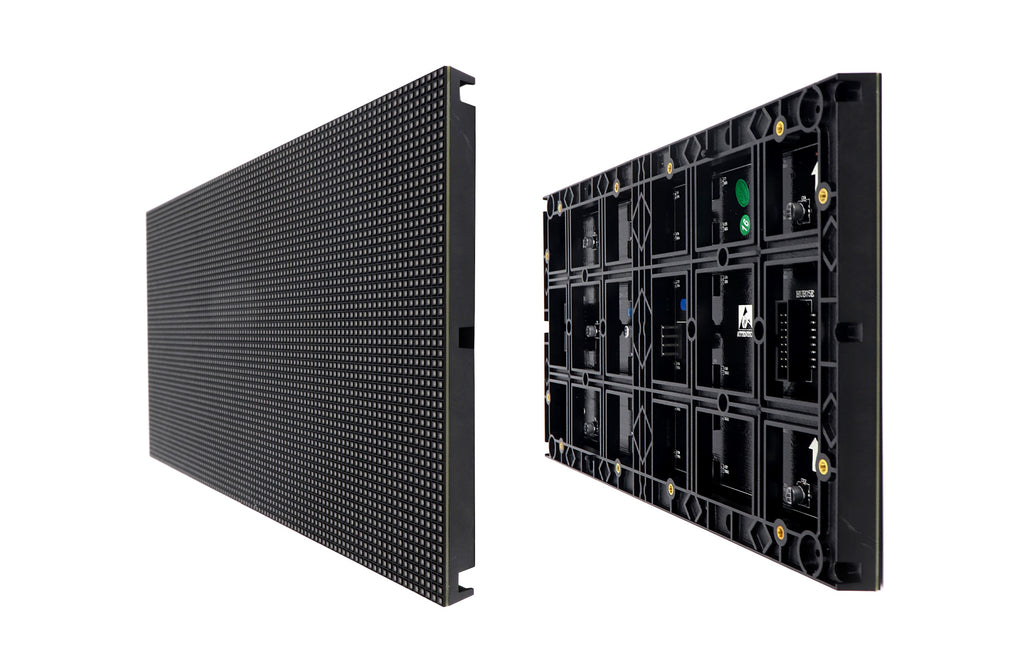
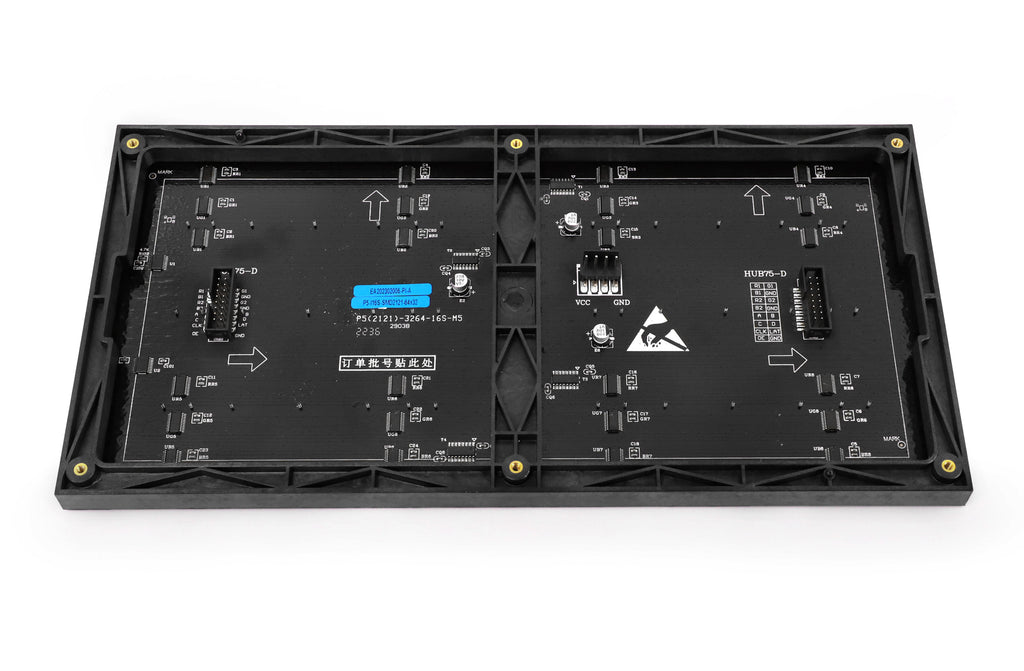
The retained module photographs illustrate LED components; they are not structural drawings or proof of a complete assembly’s outdoor protection rating.
3. Exterior Cladding and Weather Protection
Exterior cladding finishes the installation and helps protect it from the environment. It must work with the cabinet design, drainage and ventilation instead of simply covering the steel frame.
(1) Choose materials for the site and support design
- Stainless steel: brushed or mirror finishes can be used for exterior trim. Select the grade, thickness and fixing arrangement for the exposure and supported panel size.
- Aluminum panels: formed panels offer a range of finishes, but their dimensions and fixing details should be coordinated before fabrication.
- Aluminum composite panels: verify the complete panel specification, core, exterior suitability and applicable project fire requirements. Thickness alone does not establish suitability.
- Sealants and supporting materials: specify products compatible with the adjoining surfaces and intended exposure. Do not assume a weather sealant can replace a structural fixing.
(2) Coordinate sealing, drainage and ventilation
Review panel joints, top edges, cable entries and access doors as potential water-entry points. Confirm how water will drain and how seals can be inspected or replaced. The selected cabinet’s protection rating does not automatically describe the entire installed structure.
Keep the manufacturer’s required air inlets, outlets and service clearances unobstructed. Cooling requirements depend on the cabinet, power dissipation and site conditions; decorative panels should not trap hot air around the display.
4. Pre-Installation and Handover Checklist
Use the following checklist to agree responsibilities and required records before work starts. Each item should be checked against the approved project documents.
| Area | What to verify | Handover record |
|---|---|---|
| Foundation | Confirm soil conditions, screen weight, wind loads and anchor layout against approved drawings. | Foundation inspection and release for loading. |
| Steel frame and fixings | Check alignment, connections, corrosion protection and the load path to the foundation or building. | Structural inspection and connection records. |
| Grounding and power | Verify the project grounding, bonding, surge protection and power distribution design. | Electrical test results and labelled isolation points. |
| Cladding and water management | Check joints, cable entries, drainage and access doors without obstructing ventilation. | Weather protection inspection and material records. |
| Cooling and maintenance access | Confirm specified air paths and access for module, power supply and controller replacement. | Service access check and operating temperature checks. |
| Commissioning and handover | Test image mapping, playback, brightness control and operation under the agreed test conditions. | Test log, configuration backup and maintenance instructions. |
When selecting components, check compatibility and environmental specifications in our outdoor LED module range and LED power supply range. For component enquiries, contact LED-Mall with the screen dimensions, location and mounting arrangement.
5. Frequently Asked Questions
(1) What should I check before installing an outdoor LED screen?
Confirm the site conditions, screen dimensions and weight, mounting method, structural design, power supply, grounding, weather protection and service access. Agree the installation drawings and acceptance checks before construction begins.
(2) Does every outdoor LED screen need a new concrete foundation?
No. The support arrangement depends on whether the display is freestanding, ground-mounted or attached to an existing structure. An engineer should determine whether a new foundation is needed and whether an existing structure can carry the proposed loads.
(3) Is a grounding resistance below 10 ohms enough for every installation?
No. A resistance reading alone does not confirm that the complete grounding, bonding and protection system is suitable. Use the acceptance criteria for the specific project, equipment and applicable electrical requirements, with testing by a qualified electrical contractor.
(4) How do you protect an outdoor LED display from rain without blocking cooling?
Use the specified cabinets and coordinate seals, cable entries, cladding joints and drainage with the required ventilation paths. Keep air openings and service access clear, and inspect the finished assembly rather than relying only on a module’s protection rating.
(5) How long does outdoor LED screen installation take?
There is no single reliable duration for every project. The schedule depends on site preparation, foundation construction and readiness for loading, steel fabrication, access arrangements, electrical work and commissioning. Confirm these milestones with the installation team before setting a completion date.