

مدونة LEDMall
5V LED Cabinet Cooling Fan: Will the 120 mm Spare Fit?
نوفمبر
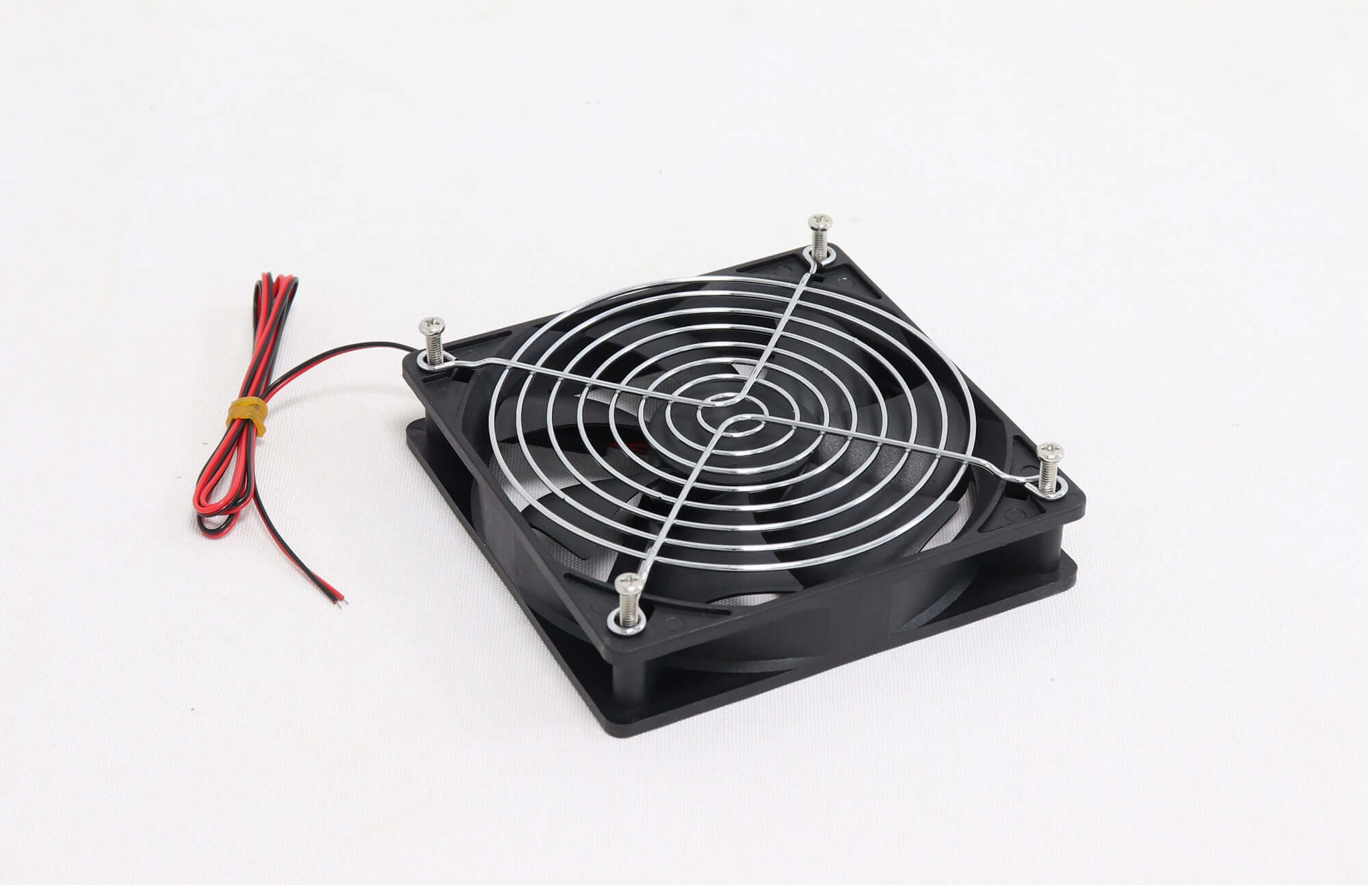
A 5V LED cabinet cooling fan is a suitable spare only if the mounting, electrical connection and cooling work for the approved cabinet design. LED-Mall’s DC5VFAN is a 120 × 120 × 25 mm brushless unit listed at 5 V DC, 0.2 A and 2,000 rpm. Those figures let you screen the part. To approve a replacement, compare the actual mounting and airflow path, then check the temperature inside a representative closed cabinet.
If a fan failed in a working wall, start with the cabinet’s maintenance record and the old fan label. In a multi-cabinet installation, the same front panel can hide more than one cabinet revision. Take the revision and original fan to the buyer, along with the direction it moves air and the connector it uses.
1. Read the 5V LED cabinet cooling fan label and drawing
01. Identify the fan fitted in the cabinet
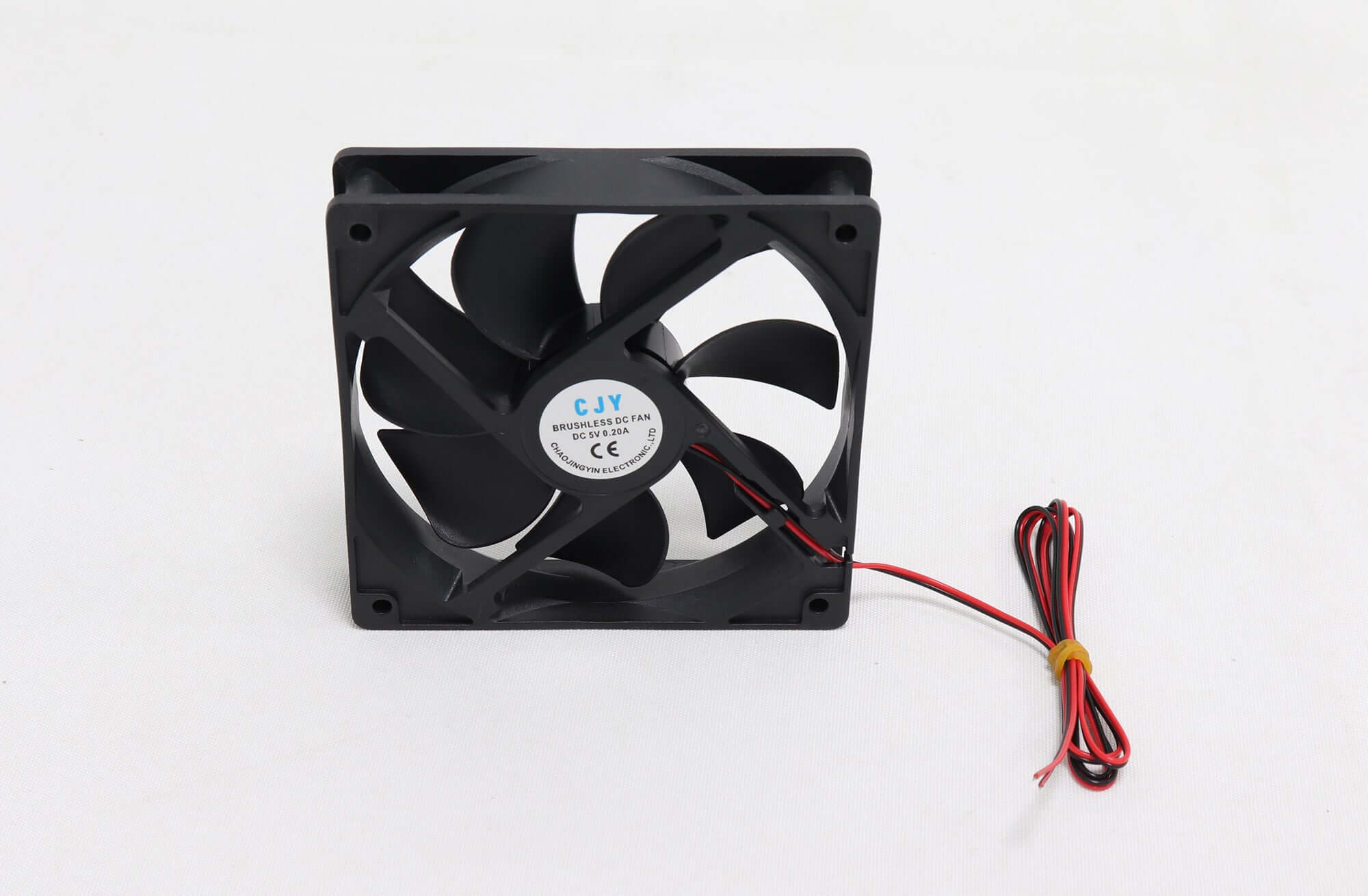
Use a clear photo of the fan label and a photograph of where it mounts. Record the cabinet model, revision and fan position. Ask the technician to identify the supply voltage and documented connector, polarity and any control or monitoring lines. Some cabinets have different intake and exhaust positions or a fan connected to a managed controller. The buyer needs to know which position the part is for before choosing a replacement by size.
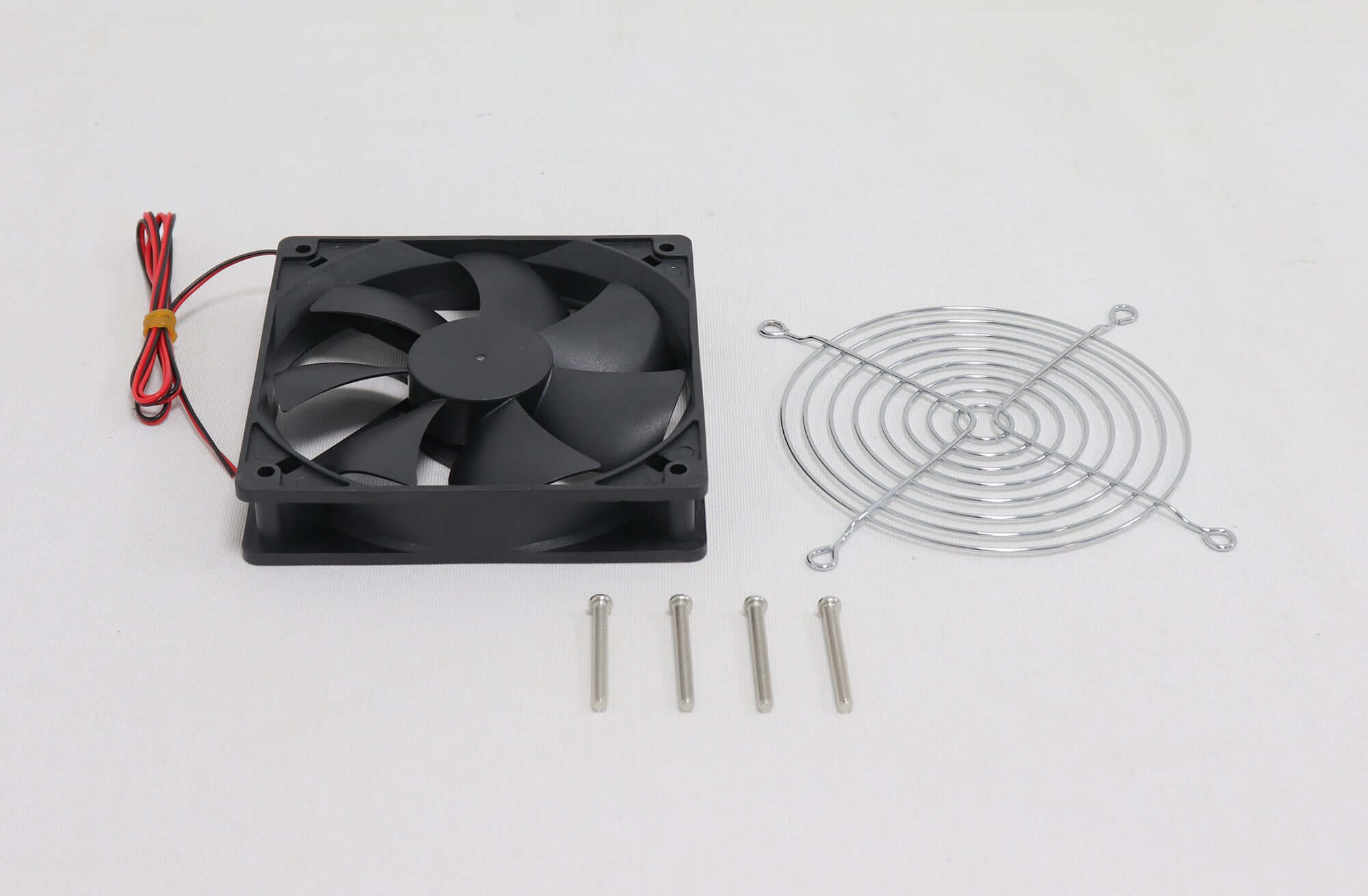
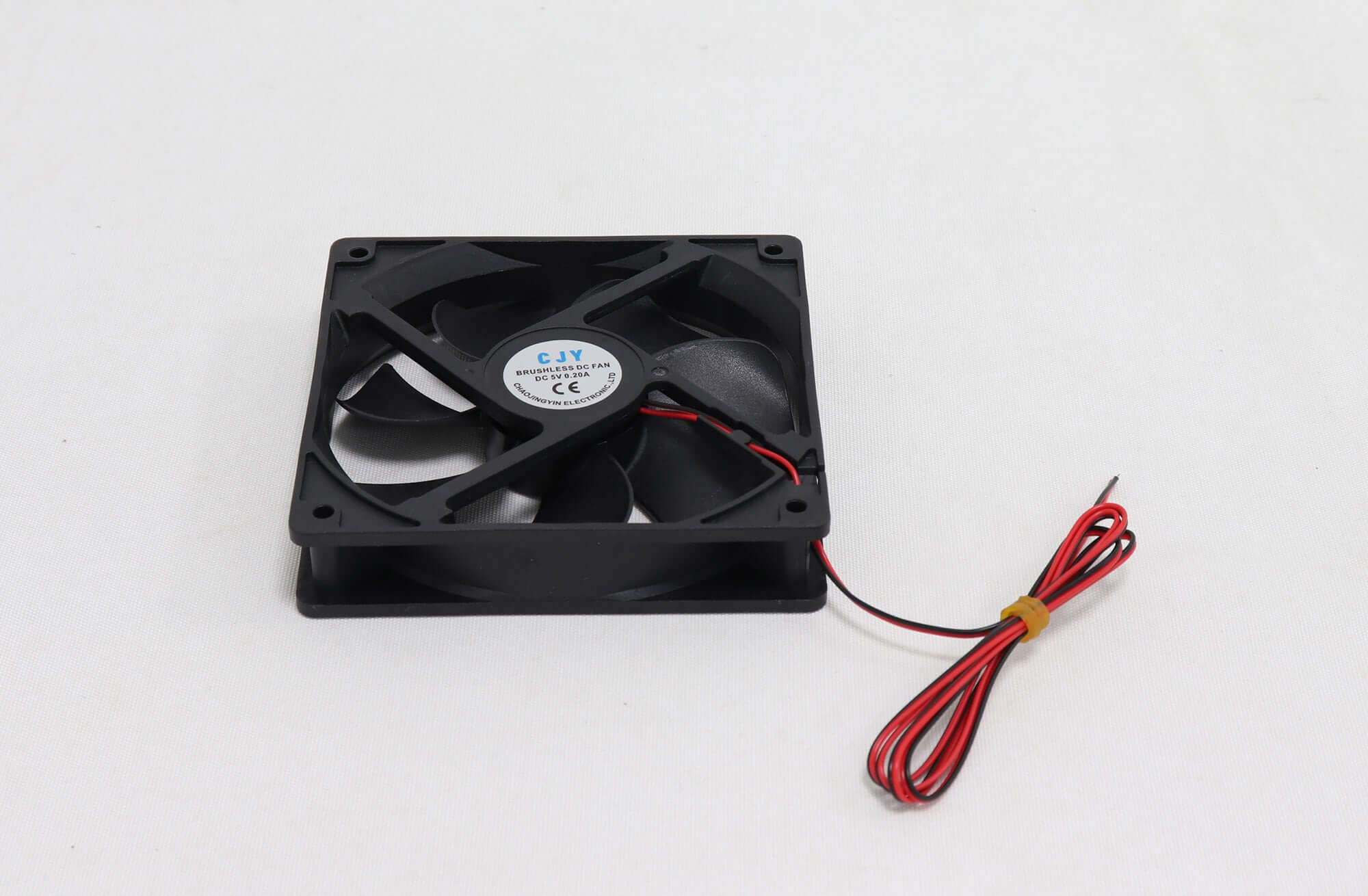
استخدم LED-Mall DC5VFAN listing specifies 5 V DC, 0.2 A, 2,000 rpm and a 120 × 120 × 25 mm enclosure, about 4.72 × 4.72 × 0.98 in. The product page lists one fan, a fan cover and four screws. In a 5V LED cabinet cooling fan quote, ask for the exact offered part and the dimensions and connections of its attachments. Do not assume the supplied screws or cover suit every cabinet that accepts the frame.
02. Compare the holes, opening and room for the lead
The frame size describes its outer envelope. Compare the fixing-hole centers, screw type, allowed depth and opening with the cabinet and fan drawings. Look at the grille or filter arrangement, the available cable exit and the space required for service. A nearby power supply, terminal shroud or brace can reduce the clearance available behind one corner of a fan even when the frame fits the cutout. Ask the installer to note any local obstruction rather than quoting the entire cabinet depth.
For an illustrative fit check, suppose the local pocket is 31 mm (1.22 in) deep along the fan axis with the cover closed. The 25 mm nominal frame leaves 6 mm (0.24 in) before allowing for anything that protrudes into that pocket. If an approved 2 mm cover spacer and a 7 mm connector projection both occupy the same unused depth in series, their combined 9 mm would exceed the remaining 6 mm by 3 mm (0.12 in). These are sample dimensions, not measurements of DC5VFAN’s accessories. Ask the cabinet designer to check the actual section, because the pieces may overlap in one layout and add up in another.
Have the technician note how the old fan is removed before approving a substitute. The new frame might fit between the mounts but require a service route the cabinet does not have once installed. An accessible fastener on the workbench may sit behind a brace in the actual wall. Send one photo that shows the access opening and one that shows the fan next to it. Include the location of any grille or retaining hardware that must be removed under the approved service procedure.
| الحقل | Published or documented starting point | قبل تقديم الطلب |
|---|---|---|
| مخطط الإطار | 120 120 × × مم 25 | Confirm fixing pattern, opening, clearances and how the lead leaves the frame. |
| التسمية الكهربائية | 5 V DC ، 0.2 A | Check the available voltage and current, startup requirements and connector for the installed position. |
| سرعة | 2,000 دورة في الدقيقة | Verify the airflow path and cooling requirements of the cabinet. Ask for flow data where the design needs it. |
| الملحقات المضمنة | Fan cover and four screws are listed with the fan. | Compare them with the approved mounting and protection arrangement. |
| Intake or exhaust | Identify the direction from the offered fan and the cabinet design. | Confirm that the fitted orientation serves the intended inlet and outlet paths. |
2. Check the actual fan supply and control
01. Compare the connecting circuit with the approved part
A 5V LED cabinet cooling fan belongs on the voltage and connection specified by the cabinet. Confirm those at the fan circuit even when the rest of the display uses another supply. The fan may draw from an auxiliary output whose available current depends on other loads. Identify the actual part and controller position rather than using the display module’s nominal voltage as a shortcut. If the original fan had a speed or monitoring connection, ask the technician which functions must be preserved.
At its listed voltage and current, 5 V × 0.2 A gives 1 W of nominal input for one fan. Two would total 0.4 A and 2 W under the same arithmetic assumptions if both were operating at their listed current. Neither calculation sets the rated startup requirement or shows that an auxiliary rail can carry the load. If a powered controller manages both fans, ask the technician to confirm the available capacity and supported behavior for that controller and cabinet.
When replacing a part from another cabinet revision, compare the vendor’s actual connector, lead length and documented pin assignment. Request confirmation before choosing a lookalike. A lead with the same visible housing can be arranged for a different assembly. Have the service technician confirm the approved connection in the exact cabinet, including the expected behavior when the cabinet starts, stops or changes its cooling demand.
02. Keep the cooling circuit in the service record
Record the fan’s position, label and confirming cabinet drawing before asking for a 5V LED cabinet cooling fan as a repeat spare. If the supply or controls differ between intake and exhaust positions, identify both lines on the order. Ask the supplier to state which part is interchangeable at which position. A fan that starts in one cabinet does not establish that another revision recognizes or controls it correctly. Keep the acceptance requirements tied to the documented equipment revision.
If multiple fans have failed in one area, ask the technician to investigate the failure pattern before stocking a large replacement quantity. Their notes could identify an obstructed air path, a control problem or an unsuitable accessory. A quote for the correct fan can move in parallel with that review. Keep the approved replacement and the unresolved diagnostic question on separate service lines so the parts purchase does not close out the fault prematurely.
3. Follow the airflow through the closed enclosure
01. Compare the intended route from inlet to outlet
Locate the inlet, the components the moving air is meant to cool and the outlet. Compare that route with the fan’s documented airflow direction. A 5V LED cabinet cooling fan mounted near an opening has to work with nearby covers, filters, grille and internal obstructions. The air may take a short path between adjacent openings if the enclosure lacks the approved separation. The important question is whether the original route still works after the replacement and with the cabinet closed.
Check which other cabinets or structural panels sit next to the opening in service. A bench leaves more space around a vent than a fitted wall can provide. If a neighboring cabinet or frame is close to the outlet, ask the designer whether the tested arrangement included that obstruction. Preserve any partition, duct or baffle used in the approved system. The fan might match the listed frame, but changing the cabinet’s air path calls for a cooling review.
For a bank of cabinets with separate air paths, mark which side air should enter and where it should leave on the drawing for each position. If the intake of one cabinet sits close to the exhaust of its neighbor, include that arrangement in the thermal review. The temperature of the air at the inlet can differ from a room reading taken elsewhere. Ask the designer which air temperature belongs on the acceptance sheet for this 5V LED cabinet cooling fan and where the technician should record it.
02. Treat speed, airflow and enclosure resistance as different fields
Revolutions per minute describe the fan’s rotational speed. An airflow or pressure specification describes how the offered fan moves air under stated conditions. Compare the latter with the cabinet design requirements where quantified data are available. The LED-Mall DC5VFAN product listing gives the speed. It does not publish an airflow rating or a fan curve. If the existing design depends on a particular flow under resistance, request the data for the exact 5V LED cabinet cooling fan or arrange a qualified acceptance check under the cabinet’s intended conditions.
A physical check can catch a loose grille or a cable touching the blades, and a technician can confirm that a fan starts and runs. Cooling approval needs evidence relevant to the parts inside the closed enclosure. Put the fan model, grille, filter and mounting orientation in the test record. If a future shipment changes one of those details, the technician can identify what the original test actually covered before approving another part.
4. Verify thermal performance on one representative cabinet
01. Agree on test conditions and the actual limit
Before buying a batch of a different 5V LED cabinet cooling fan, ask the cabinet designer which component temperatures matter and what limits apply. Identify the site ambient conditions and representative display operation. Use the closed enclosure with its intended covers and filters. Have the technician document which points were measured, the display settings and whether the readings had settled under the test procedure. A temperature reading with the cabinet open describes a different airflow arrangement.
Consider an illustrative comparison using the same cabinet and measurement point. With ambient air at 23 °C (73.4 °F), a reference assembly reaches 43 °C (109.4 °F) at that point, a rise of 20 °C. A candidate reaches 47 °C (116.6 °F) with the same ambient and recorded load, a rise of 24 °C. The candidate is 4 °C warmer at the measured point under those assumptions. Neither figure describes DC5VFAN test results. Review the difference with the approved component limit and test at the actual design conditions.
If the hypothetical limit at that point is 45 °C (113 °F), the reference is 2 °C below it and the candidate is 2 °C above. The candidate fails that check regardless of whether both fans started normally. If the acceptable range instead applies at a different component or sensor, move the comparison to the approved point and collect the evidence again. The buyer should receive enough of the test record to see which measurement determined the approval and whether it applies to the intended cabinet position.
If an outdoor or enclosed indoor installation will see hotter conditions, ask the technician to evaluate the actual expected ambient and constraints. Using the sample rise as an allowance can identify what needs investigation. The increase may change with fan behavior, enclosure resistance or display load. Keep a comparison at one ambient separate from approval at the most demanding documented condition.
| تحقق | Record from the cabinet | سؤال القبول |
|---|---|---|
| Service and fit | Frame, mounting, guard, lead route and clearance with the cover closed. | Can the fan be installed and serviced through the approved access route? |
| تشغيل الكهرباء | Approved supply, startup, control and monitoring behavior for the fitted part. | Does the part work with the cabinet’s actual circuit and controller? |
| مسار الهواء | Intake and exhaust orientation plus intended covers, filters and clearances. | Does the fitted fan support the cooling path in service? |
| Thermal result | Ambient, test load, test points, settled temperatures and approved limits. | Does the tested configuration meet the design limits at the relevant conditions? |
| مجال | Fan and cabinet revisions, accessories and any limits of the test. | Which cabinet types and operating conditions does the approval cover? |
02. Know when a like-for-like spare is enough
If the exact approved 5V LED cabinet cooling fan is available and the assembly is unchanged, the service team can follow the cabinet maker’s replacement procedure and service checks. Where the supplier proposes a different fan or the enclosure has been modified, ask which checks need to be repeated. A note that says only “120 mm fan” can be difficult for an installer to interpret. Preserve the exact fan identifier and operating conditions it covers.
5. Keep the spare linked to its cabinet position
When replenishing a service shelf, put the approved fan, exact supply and cabinet position on the same line. Keep the accessories visible on the order and check whether the original cover and fasteners are part of the approved fit. For a mixed wall, photographs keyed to cabinet revisions are useful receiving records. The LED-Mall display parts catalog can help identify the other parts, such as the cabinet supply or connections, when a technician is reviewing the replacement.
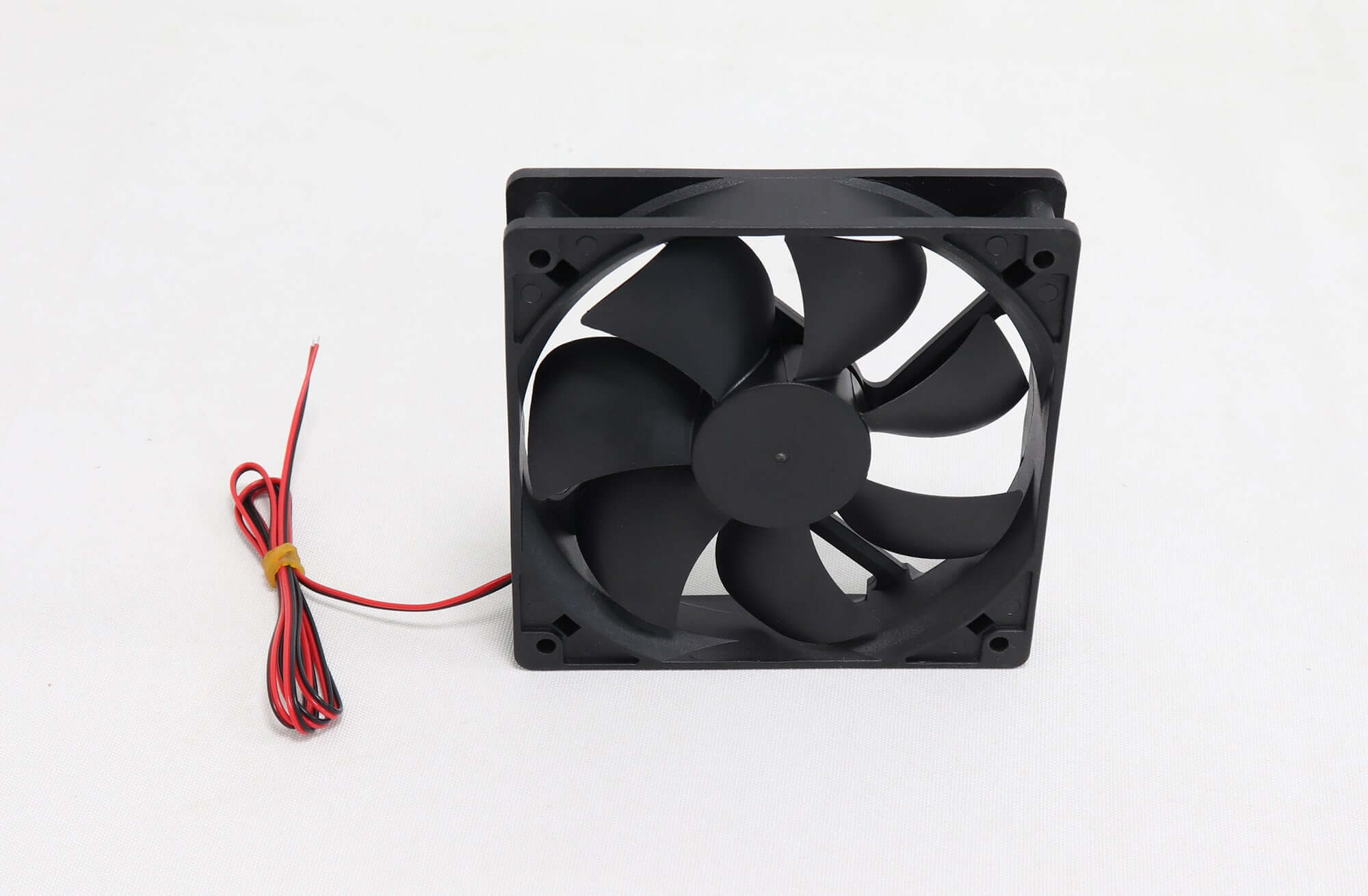
For a new order, ask the supplier to identify the exact proposed 5V LED cabinet cooling fan and any revision changes between sample and shipment. If the receiving team finds that two similar packages have different connector or mounting details, use the approved order and cabinet sheet to separate them. When the original part cannot be identified, have the cabinet builder review the mounting, electrical and cooling evidence before assigning a common replacement to several cabinets.
الأسئلة المتكررة
Can a 12 V fan of the same size replace DC5VFAN?
Check the approved cabinet fan circuit and its supported parts. A different voltage requires a separate design review. The frame size is only one of the requirements.
Does a 2,000 rpm rating tell me the airflow?
No. Ask for applicable flow and pressure information for the offered fan where it is specified. Verify the completed cabinet against its intended operating conditions.
Can I keep the old grille when changing the fan?
Confirm that it is still part of the approved cabinet arrangement and fits the exact replacement. Its clearance and effect on the air path matter to the final assembly.
What should I check if the fan starts but the cabinet runs warmer?
Ask the technician to check the fitted direction, air path, obstruction and operating conditions against the cabinet’s accepted reference. Record ambient temperature and the same measurement points before comparing results.
Can I request several spares for the same wall on one line?
Yes, when the cabinet positions use the same approved fan and accessories. Use separate lines where the power, connector, mounting or airflow requirements differ.
Is the 120 mm outside dimension the screw spacing?
Use the exact mechanical drawing for the screw pattern and the actual cabinet’s mounting dimensions. The outer frame dimension does not identify the positions or type of fixings.
Request the fan for the exact cabinet
Send LED-Mall the cabinet model and revision, old fan label, mounting dimensions, allowed lead and connector, airflow direction, intended operating conditions and quantity. If a different 5V LED cabinet cooling fan is proposed, ask which drawing, label and cooling data support that candidate. Ask LED-Mall to confirm DC5VFAN or the approved replacement before buying a service batch. If a separate power source is involved, include its exact model, documented output and available current in the request.