
LEDMall Blog
MCTRL660 PRO Lage latentie: Voorwaarden vóór bestelling
november
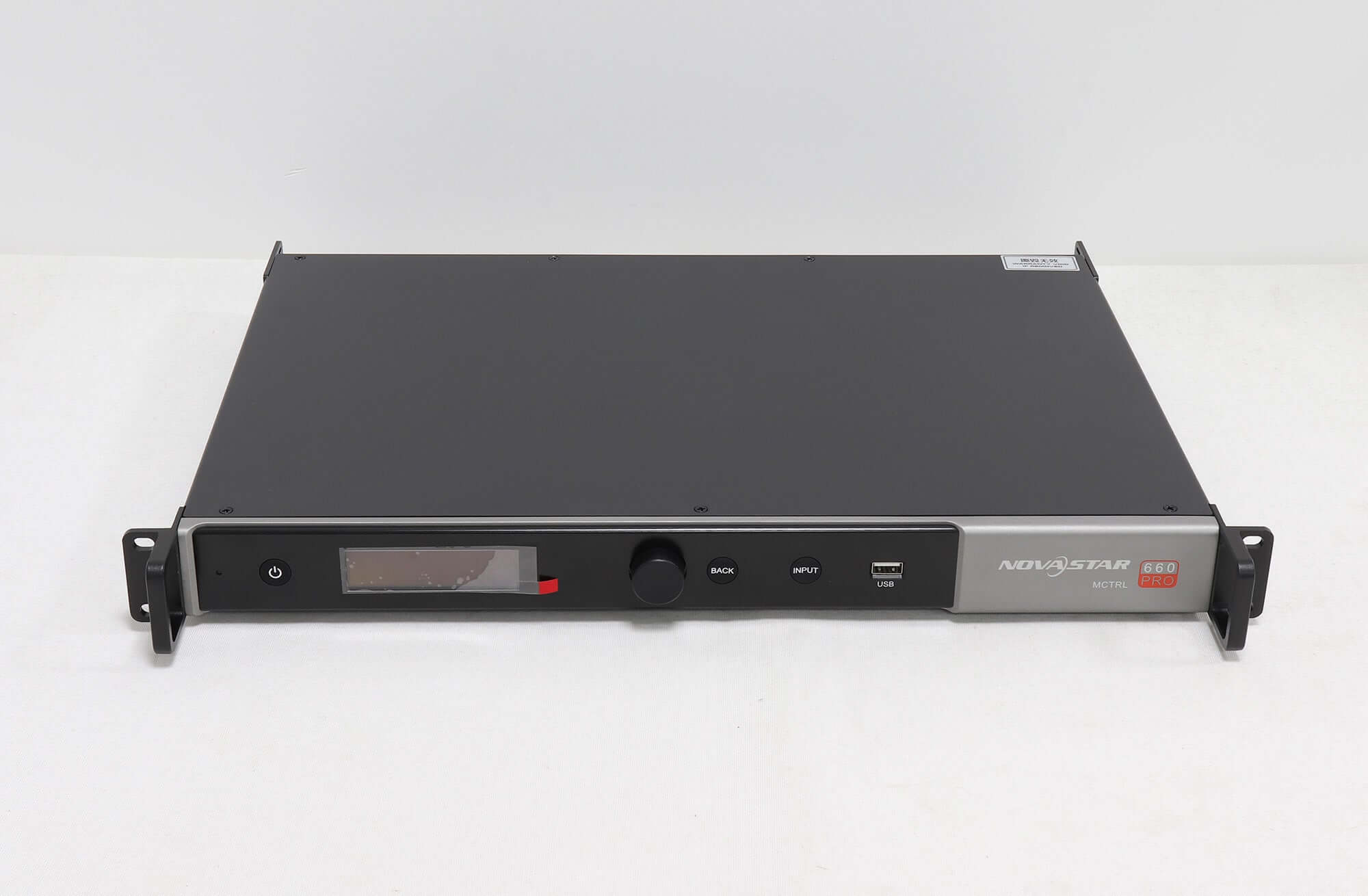
MCTRL660 PRO low latency is a conditional controller function, not an unconditional camera-to-LED-wall guarantee. NovaStar’s User Manual V1.4.1 requires vertical cabinet loading and limits each Ethernet port’s loading width to 512 pixels. It also rules out simultaneous use with image mirroring, interlaced SDI sources or GENLOCK.
This explanation is for a rental-system buyer evaluating an image-magnification or live-presentation requirement before ordering. It follows User Manual V1.4.1, released August 22, 2024, especially section 6.7.9. The project examples and test suggestions are planning guidance; they do not represent measurements from a customer installation.
Define the MCTRL660 PRO low latency claim
The manual describes less than one millisecond between the controller’s video input and corresponding output when the image start position is zero. Its overview separately describes a one-frame source-to-receiving-card result with low latency, input-source synchronization and vertical loading. Those descriptions use different endpoints. Neither is a complete camera-to-visible-wall measurement.
A live image can pass through a camera, conversion equipment, a switcher, processing and the LED system before the audience sees it. A favorable figure for one stage cannot describe the entire route. Ask the supplier to mark the beginning and end of every quoted delay. If two proposals use different endpoints, their timing figures are not directly comparable.
Frame counts also need a frame rate. The arithmetic below converts an ideal frame interval into time; it is not a measurement of this controller. It helps a buyer recognize why “one frame” should not be treated as a fixed number of milliseconds for every production format.
| Video rate | One frame interval | Two frame intervals | How to use this figure |
|---|---|---|---|
| 24 fps | 41.67 ms | 83.33 ms | Identify the production format before comparing a frame-based claim. |
| 30 fps | 33.33 ms | 66.67 ms | Keep the frame rate with the quoted number in the purchase record. |
| 60 fps | 16.67 ms | 33.33 ms | Use the agreed source and display route for the acceptance test. |
For MCTRL660 PRO low latency procurement, state whether the priority is a controller-stage target or the visible response of the complete system. A presenter looking at their own image on a nearby wall may care about the complete response. A technician comparing controller configurations may need a narrower test. Both questions are valid, but they require different evidence.
Check the cabinet route before approving the order
The documented width condition concerns the area loaded by one Ethernet port. It is not the width of the entire wall and does not replace a full loading calculation. Ask for a port-by-port drawing that shows cabinet positions, actual pixel dimensions and cable direction. A total screen-pixel figure alone cannot demonstrate that a proposed route meets the low-latency conditions.
For example, consider cabinets that are 256 pixels wide. Two adjacent cabinet widths make 512 pixels; three make 768 pixels. This simple comparison can flag a route for engineering review, but it does not approve either layout. Cabinet count, height, receiver capability, input format and the complete configuration still need checking. The example is arithmetic, not an instruction to connect a particular wall.
When specifying MCTRL660 PRO low latency, have the designer mark the physical route rather than merely rotating a drawing. The direction a cabinet faces is different from the sequence in which the data cable reaches cabinets. A rear-view photograph and a front-view screen map should identify the same positions clearly enough that a technician can reconcile them during setup.
If the supplier proposes reusing a familiar rental cable layout, ask whether that exact layout was used for the promised timing demonstration. A system can produce a correct picture while leaving a timing requirement unproven. Keep the approved configuration with the equipment record so the next crew can reproduce the tested arrangement.
Resolve required features as one configuration
The manual’s exclusions mean that MCTRL660 PRO low latency and the listed conflicting functions cannot simply be selected together. Ask the production engineer to identify which functions the show actually requires. Do not remove synchronization or image-orientation requirements just to obtain a more attractive delay figure on a quotation.
A feature list is useful for initial selection, but it does not establish an approved simultaneous operating state. Write one proposed state that includes the source format, synchronization method, image treatment and cabinet route. If the proposal depends on two mutually exclusive settings, the engineer must resolve that conflict before the buyer accepts a performance commitment.
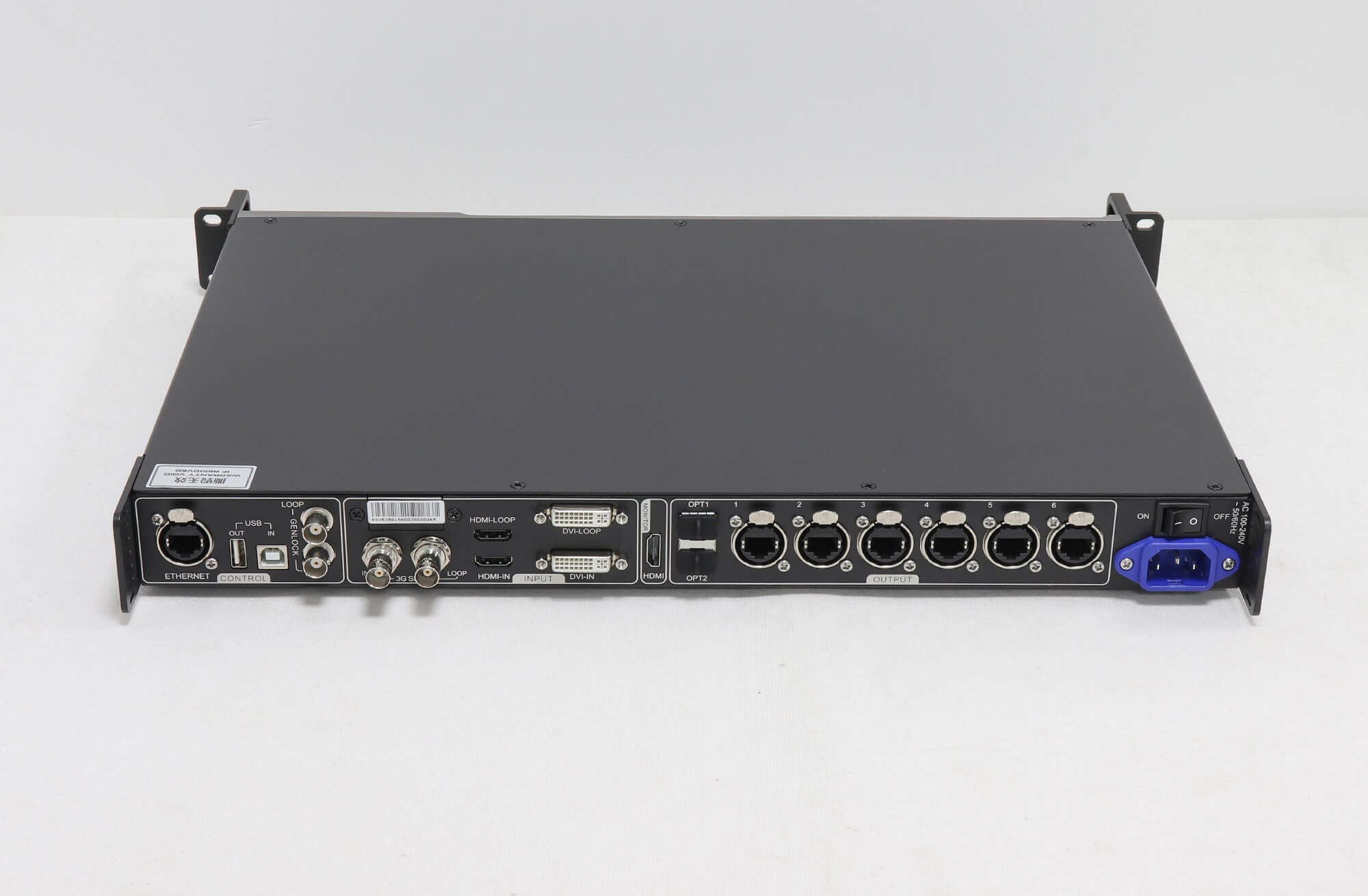
De MCTRL660 PRO productpagina covers the available hardware connections. For color-depth planning, use the separate MCTRL660 PRO 10-bit explanation. A configuration accepted for one feature should not automatically be treated as validated for a different feature or timing requirement.
Agree on a demonstration that answers the buyer’s question
Before a MCTRL660 PRO low latency demonstration, agree on the signal path and the test endpoints in writing. Record the source device, format, controller settings and receiver arrangement. If another processor is in the proposed show system, include it in the complete-system test. Removing equipment for the demonstration changes the question being answered.
Use repeatable content with an identifiable change instead of relying solely on a person saying that the wall “feels fast.” Ask the integrator to describe the instrument or recording method, its time resolution and the reference path. The measurement method must be capable of resolving the difference the supplier intends to claim.
Retain multiple observations rather than choosing only the most favorable result. Label each observation with its setup and note any source or setting changes. When comparing normal and low-latency modes, change only the item under investigation where the supported configuration permits. Otherwise, a difference could come from another changed component or format.
For MCTRL660 PRO low latency acceptance, keep separate conclusions for the controller function and the complete presentation route. A narrow test may confirm the controller’s behavior while leaving audience-visible timing unmeasured. That is a useful partial result when labeled correctly; it should not become a broader performance guarantee in the purchase record.
Vragen van kopers
Can a phone video prove a sub-millisecond result?
An ordinary recording is not sufficient evidence by itself. The capture rate, exposure, display scanning and reference arrangement affect what can be inferred. Ask for a documented method whose resolution supports the claim. A casual clip can show an obvious problem without establishing a precise numerical delay.
Does a normal picture on the controller’s monitor connection validate wall timing?
No. A local monitor and the receiving-card-to-LED route are different observation points. Specify which output the test observes. A confidence picture can be useful operationally while leaving the timing of the visible LED wall unverified.
Should a replacement receiver be accepted because the picture looks correct?
Picture correctness is only one check. If the receiver or its program changes, ask the integrator to confirm the saved configuration and repeat the timing acceptance relevant to the show. Preserve the earlier result as a record of its original setup rather than applying it automatically to the replacement.
Submit the timing requirement with the port map
For an MCTRL660 PRO low latency review, send the proposed source format, full signal-path diagram, receiver models, cabinet pixel dimensions and output-port map. Identify required synchronization and image treatments, then state the timing endpoints and acceptance method. Ask LED Mall to review the proposed configuration and confirm the applicable hardware, documentation and current availability before ordering.