
LEDMallブログ
LRS-350-5 ピーク負荷:150%の主張は適用されるのか?
11月
LRS-350-5 peak load planning cannot borrow the series’ 150% allowance. In MEAN WELL’s LRS-350 specification dated September 12, 2025, the note allowing 150% for up to one second explicitly applies to 12–48 V models. It does not give the 5 V model a documented 450 W or 90 A allowance.
This explanation is for an LED cabinet builder reviewing a power-supply purchase where the load changes during operation. The useful question is whether the offered supply meets the actual load profile under the agreed installation conditions. A short pulse needs a defined requirement and supporting evidence, just as the continuous load does.
The examples below are hypothetical purchasing checks. They distinguish a documented operating capability from a protection threshold or an input-side event. They do not report a tested cabinet or establish that an unspecified transient above the rated output is acceptable.
1. Read the LRS-350-5 peak load condition by model
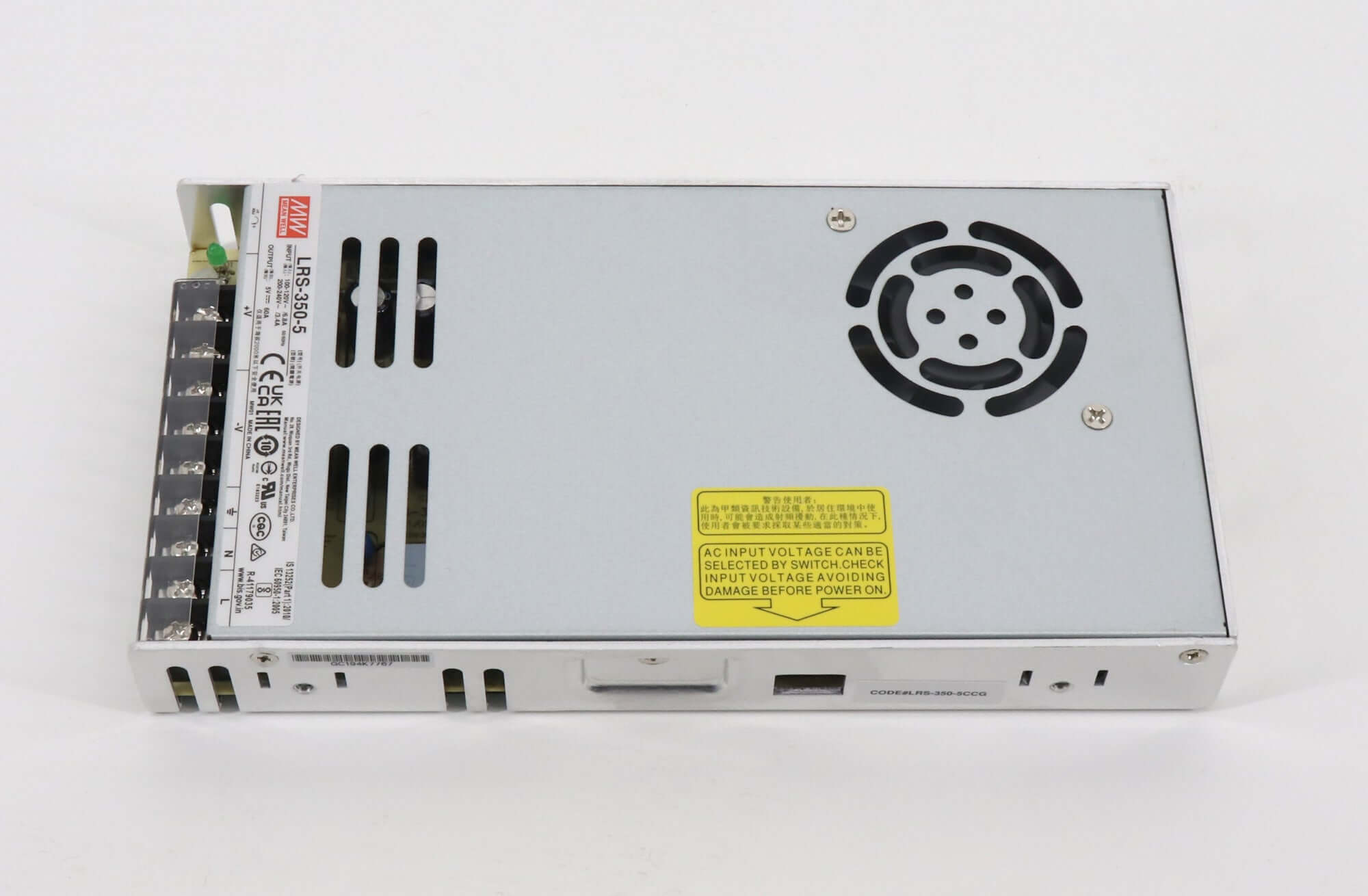
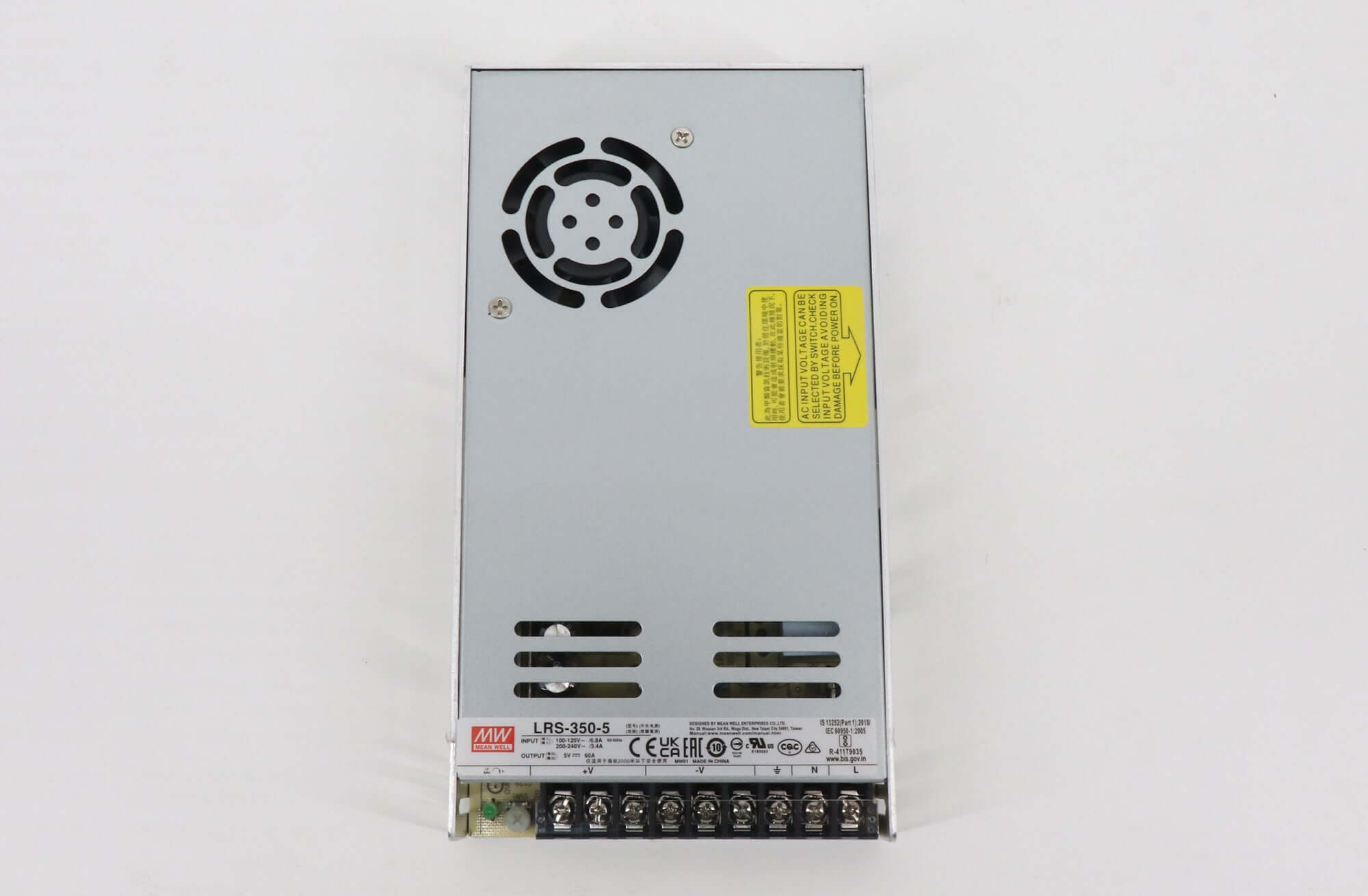
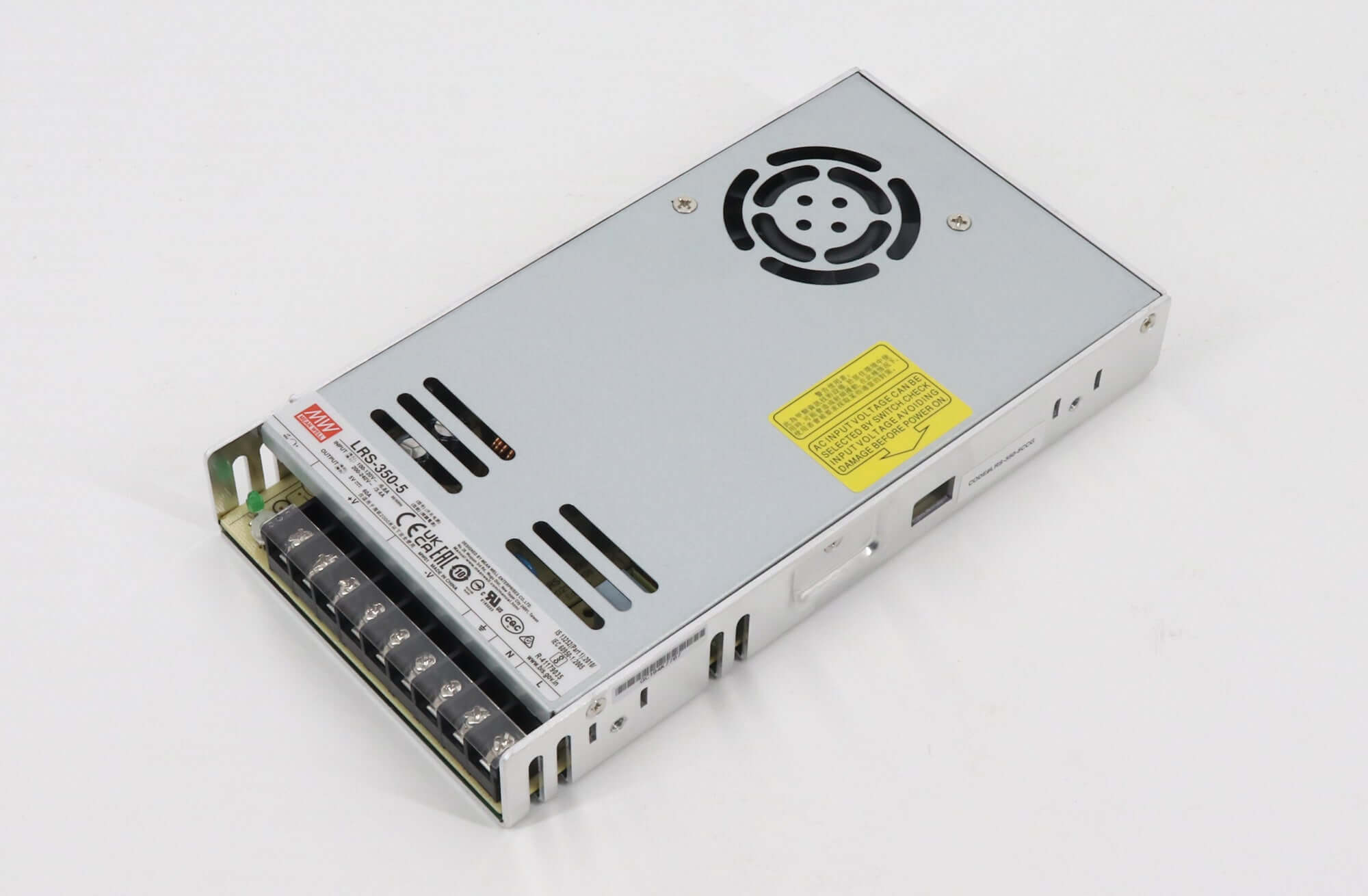
その LRS-350-5 product reference identifies the 5 V unit. Its rating is 60 A and 300 W. Keep that full model suffix with the purchase request; a series-level description can contain conditions that apply to other output-voltage models.
For LRS-350-5 peak load approval, retain the voltage qualifier with the one-second claim. Removing it changes the meaning of the manufacturer’s note. A quotation that lists “LRS-350, 150% peak” has not yet answered whether the specific 5 V supply has the capability the buyer requires.
Consider a hypothetical cabinet requirement of 350 W for half a second. The duration being shorter than one second does not make the 12–48 V note applicable to the 5 V model. Ask the supplier to resolve that requirement with model-specific documentation or a different reviewed proposal before accepting the equipment list.
The limitation also should not be exaggerated into a claim about every instantaneous event the hardware could ever produce. The purchasing conclusion is narrower: this particular 150% statement does not document a 5 V allowance. Keep an unverified transient requirement open rather than filling the gap with an assumed capability.
2. Separate output capability, protection and input events
LRS-350-5 peak load discussions can become confused when several current and power figures appear in the same table. Each number needs its own label and condition. A protection entry or an AC startup-current figure should not be copied into the DC load budget.
The manufacturer’s LRS-350-5 test report lists an overload protection range of 110–140% of rated output power. That is a protection parameter, rather than an extra continuous or transient operating allocation. MEAN WELL’s protection guidance describes hiccup protection as repeated output interruption and recovery behavior; it is not a way to supply an approved extra load.
| Figure or claim | 何が説明されているか | Purchasing evidence to request |
|---|---|---|
| Model-specific rated output | The identified supply’s output rating | The exact model and load budget under applicable conditions |
| A short-duration output claim | A capability with model and timing conditions | The applicable voltage variant, duration and supported operating context |
| 過負荷保護 | Behavior outside the normal load envelope | A design that meets the required operation without relying on protection as useful output |
| AC input inrush | A startup event at the supply input | A separate input-distribution review by the responsible electrical designer |
| A sample demonstration | The tested arrangement and conditions | Its recorded scope and any difference from the proposed cabinet |
The same report’s typical 60 A input inrush specification is specified at 115 VAC and 230 VAC. It is an AC-side startup parameter. Its numerical resemblance to the model’s 60 A DC output rating does not make the two interchangeable. Use the input figure for the relevant input review and the output information for the load requirement.
3. Describe the load over time
An LRS-350-5 peak load request should identify the steady demand and the changing demand separately. Provide the required output voltage, normal operating load, maximum expected demand, event duration and repetition. Ask the responsible electrical engineer to determine the appropriate measurements and validate the proposed supply arrangement.
A single average-power number leaves important questions unanswered. For example, two hypothetical cabinets could show the same average demand while having different maximum events. A supplier cannot evaluate their transient requirements reliably from the average alone. Retain the actual load information rather than replacing it with a universal headroom percentage.
For example, a hypothetical load record might state 200 W during one operating state and 280 W for 200 milliseconds, repeated every ten seconds. That is more informative than a single average, but it is still a requirement for review. Being below the nominal wattage alone does not verify the supply under the proposed installation conditions. The example neither predicts an actual cabinet’s demand nor reports a successful test.
Include when the event occurs. A requirement during initial power-up and a requirement repeated during normal content operation should remain distinguishable in the request. Describe the intended display behavior as well as the electrical demand, so the supplier knows which operating result the design must support.
Keep LRS-350-5 peak load evidence tied to the measurement conditions. Identify the cabinet, supply model, load configuration and relevant operating state. If an estimate is being used before measurements are available, label it as an estimate and identify what still needs confirmation. A precise-looking number does not become measured evidence because it appears in a quotation.
4. Compare offers against the same requirement
A supplier answering an LRS-350-5 peak load inquiry should identify the basis for the proposed configuration. Ask what is included in the equipment scope, what has been confirmed and which part of the demand remains unresolved. Keep a manufacturer statement distinct from a supplier’s sample-test result.
Compare LRS-350-5 peak load responses using the same load record. If one supplier answers only the normal demand and another evaluates the stated event as well, the two responses address different scopes. Ask each to identify the reviewed condition and any exclusion explicitly. A lower equipment price cannot resolve a missing technical answer, and no price difference should be invented to represent work that has not been defined.
より広い Mean Well LRS selection guide addresses model ratings and installation factors. Those checks still apply here. Record the intended AC supply, cooling arrangement and operating environment with the transient requirement rather than treating a peak claim as permission to ignore other limits.
Define acceptance before approving the order. The responsible engineer should choose a suitable assessment for the real load and installation, then retain the result with the documented conditions. A supplier demonstration on a different load can inform the review, but its scope should remain visible rather than being treated as proof for every cabinet.
Retain the accepted load allocation with the cabinet build record. A later change in module quantity, power distribution or the required operating program should be compared with that record. Identify which conditions changed and ask the responsible engineer which parts of the review need repeating. This gives future purchasing staff a concrete basis for a replacement request instead of relying on a remembered series name.
For LRS-350-5 peak load approval, unresolved output behavior should remain an exception requiring an answer. Do not accept a proposal merely because a protective function exists or a short demonstration did not trip it. The purchasing requirement is supported operation under the agreed conditions, not an experiment to find when protection begins.
よくある質問
Does the 300 VAC surge statement establish an output peak allowance?
No. The datasheet’s 300 VAC for five seconds statement concerns input tolerance. It does not specify additional DC output available to the LED load. Keep input-side conditions separate from an output-power requirement.
Can supplies simply be paralleled to meet the transient requirement?
Do not infer supported current sharing from a need for more output. Request a documented supply and distribution arrangement for the actual load. The selected models, interconnection and behavior require their own design review.
Does an acceptable whole-cabinet total approve every power branch?
No. The equipment request should retain the allocation to each supply and branch. Have the electrical designer review the actual distribution and component ratings. An overall total alone does not establish that every individual path meets its assigned demand.
Prepare a load-profile inquiry
Send the exact 5 V supply model, load allocation, steady demand, transient magnitude, duration and repetition, plus the intended installation conditions. Ask LED Mall to review the LRS-350-5 peak load requirement with the supporting documents available, so unverified assumptions are resolved before purchasing.