

Blog LEDMall
Boîtier CZCL A-200W-5 808 vs 812 : lequel convient ?
novembre
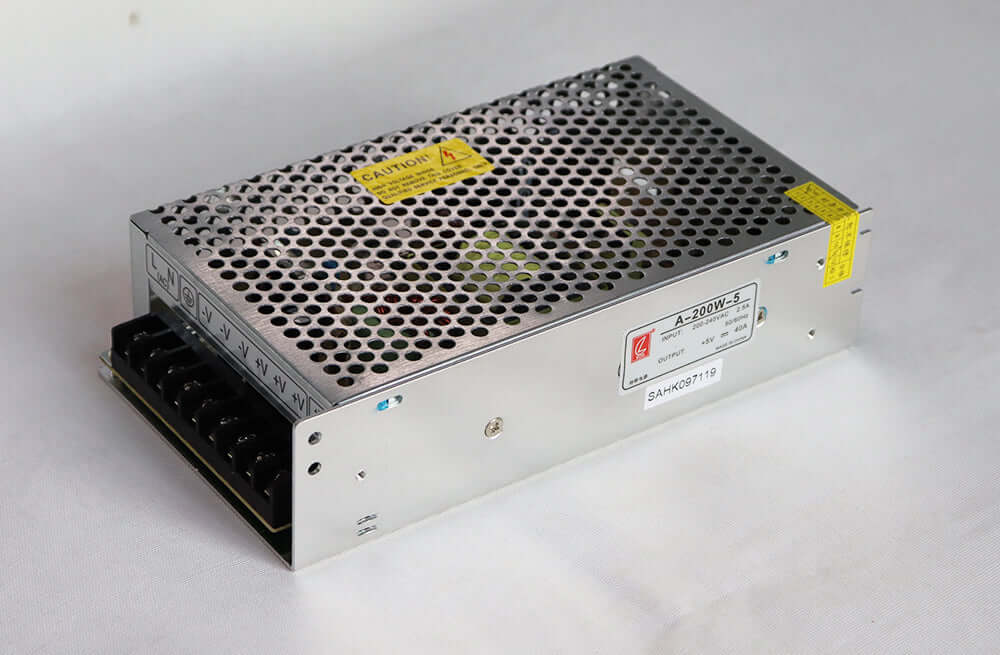
For a CZCL A-200W-5 Case 808 vs 812 order, check the original case marking, the cabinet drawing and the actual AC feed. LED-Mall lists both models at 5 V and 40 A. Case 808 measures 199 × 110 × 50 mm and lists 176–264 V AC input. Case 812 measures 222 × 115 × 50 mm and its listing shows 100–120 or 200–240 V AC input. Verify which input option the supplier is offering for Case 812 before issuing the purchase order.
If you are buying a spare for an existing LED cabinet, ask the technician to identify the approved part at the failed cabinet position. Similar listings can show a common output rating while describing cases with different footprints and approved feeds. The safest purchase is the full documented part number, case and input option. A proposed substitute should go to the cabinet maker for review before anyone commits to it.
1. Read the CZCL A-200W-5 Case 808 vs 812 markings
01. Put the nameplate and cabinet record side by side
Start with a legible photograph of the old supply’s nameplate and the cabinet’s maintenance record. Record the full model, case identifier, input and output ratings, and the cabinet’s hardware revision. If the cabinet went through an earlier repair, compare the installed part with the approved repair record. Send the discrepancy to the cabinet maker if they differ. A quote based on a worn label can be perfectly accurate for the item offered and still wrong for the installation.
Comparez les Case 808 product page et la Case 812 product page. The CZCL A-200W-5 Case 808 vs 812 distinction is useful even when the cartons have similar labels. Both catalogue entries describe a nominal 5 V, 40 A unit, but the case and input fields belong on the same purchase record as the common model string. Ask the supplier to show the exact offered device and include the case code in their confirmation.
02. Record which document supports each figure
The Case 808 figures are shown in the LED-Mall listing and the manufacturer-branded 5 V, 40 A specification. The Case 812 values in the comparison below come from LED-Mall’s product listing. Ask for the offered unit’s nameplate and matching drawing and specification before relying on the latter figures for a purchase. Treat the document titled A-200W-5 as evidence for the case it identifies. Tell the supplier which document and drawing revision the cabinet approval references if the same family name appears on more than one file.
| Champ | Cas 808 | Cas 812 | Ce que l'acheteur doit confirmer |
|---|---|---|---|
| Catalogue DC output | 5 V, A 40 | 5 V, A 40 | Verify usable continuous output at the actual operating conditions. |
| Case outline | 199 × 110 × 50 mm (7.83 × 4.33 × 1.97 pouces) | 222 × 115 × 50 mm (8.74 × 4.53 × 1.97 pouces) | Compare the exact mechanical drawing, screw locations, clearance and cable access. |
| Entrée CA indiquée | 176–264 V CA | 100–120 or 200–240 V AC | Confirm the exact supplied option and the site feed with the technician. |
| Autres infos | Case 808 listing and matching Case 808 specification | Case 812 listing | Ask for offer-specific documents when the approval depends on a range or drawing. |
2. Check the installed space, including the cables
01. Compare the outline before requesting an alternate
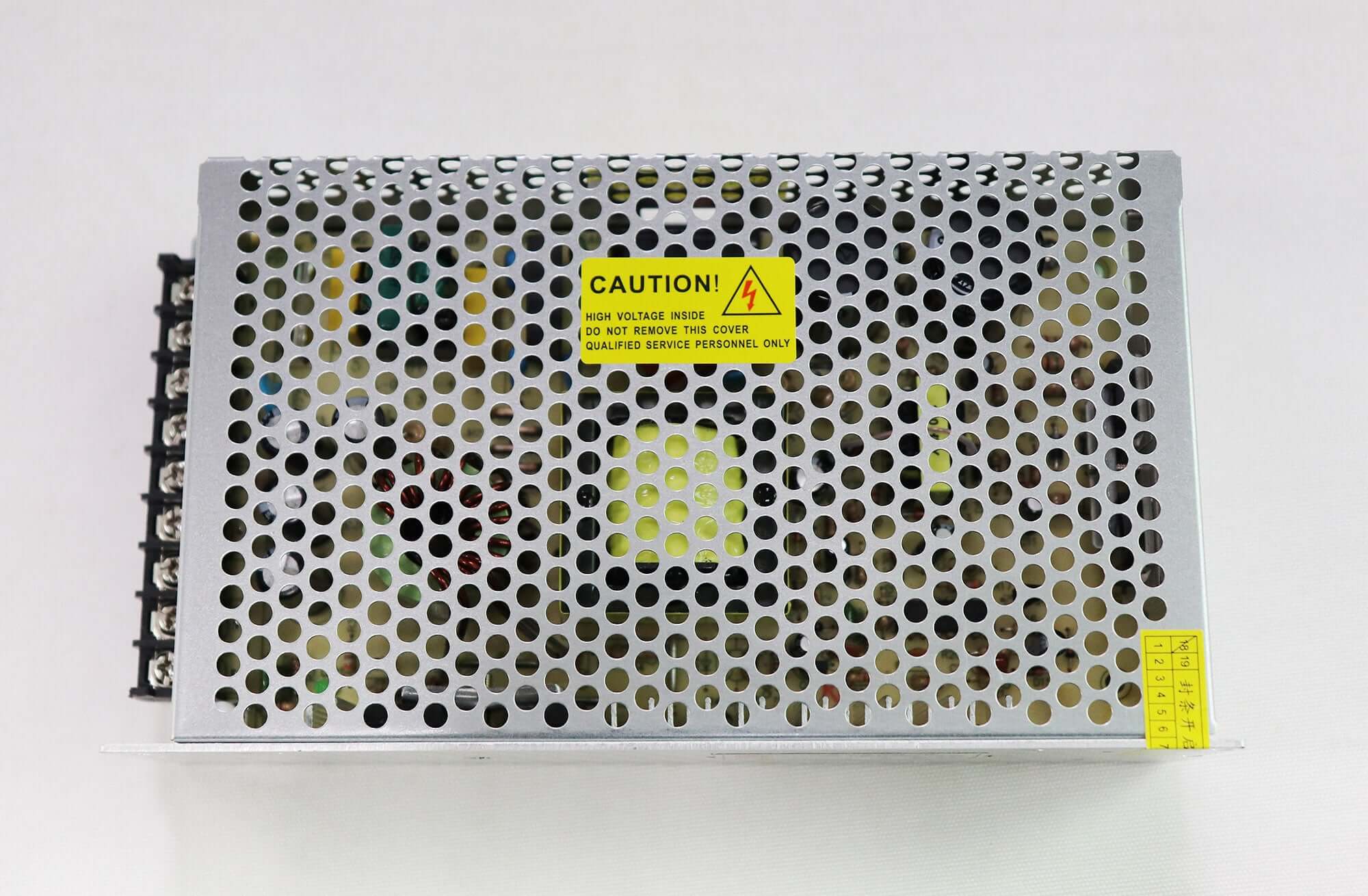
For the CZCL A-200W-5 Case 808 vs 812 fit check, first compare the empty space to the dimensions in the offered drawing. Case 812 is listed as 23 mm (0.91 in) longer and 5 mm (0.20 in) wider than Case 808. Both have a stated 50 mm (1.97 in) height. That is enough to rule out some brackets, but it does not settle where the screws land or whether the installed harness will reach.
Take an illustrative cabinet with a 215 × 114 × 60 mm (8.46 × 4.49 × 2.36 in) box available around the power supply. Comparing outlines only, the 199 × 110 × 50 mm case would have 16 mm of unallocated length, 4 mm of width and 10 mm of height. Those are total clearances in each dimension. Their distribution depends on where the case mounts. The 222 × 115 × 50 mm case would exceed the available length by 7 mm (0.28 in) and width by 1 mm (0.04 in), so it would fail the outline check in that orientation. The smaller case still needs a proper fit check for terminals, mounting hardware and cooling.
In practice, a cabinet bay can have a full-width lip at the door, a narrower path to insert the unit or a brace near just one corner. Ask for a photo with a scale and the cabinet layout so a vendor can compare the offered housing. A technical drawing can establish whether a longer unit will foul a rail before you discuss terminal positions. If the installation has front or rear-only access, check whether the technician can fit and remove a supply with the existing cables and neighboring panels in place.
02. Check the bracket and routing independently
Overlay the approved cabinet pattern and the exact supply mounting drawing for a proposed CZCL A-200W-5 Case 808 vs 812 substitution. Confirm screw centers, thread and usable fastener depth with the technician. Ask where the AC and DC connections sit relative to the mounting points and how much service room the terminal guard needs. A connector that reaches on an open bench can still create pressure when the cabinet is closed. Request a photo of the closed service envelope during the sample check if the fit is close.
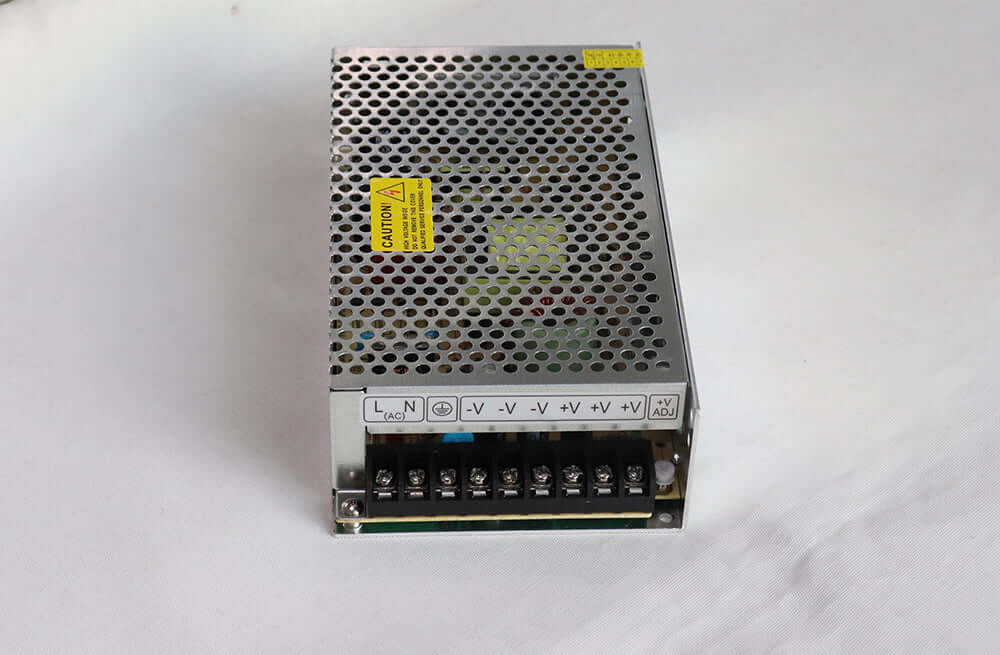
Use the drawing to check the cooling arrangement too. Consider nearby electronics, the approved mounting orientation, clearance near openings and any heat transfer path the manufacturer specifies. If a different case would require moving a brace, changing a cable or blocking a clearance in the drawing, send that change to the cabinet maker. Put any approved new bracket, restraint or harness on a separate order line so the spare will have the parts needed to fit.
If the supply is retained by a strap, clip or cover, photograph that hardware with the old case seated. A case drawing can show its screw positions without showing how the cabinet builder actually restrains the unit. One useful way to present the CZCL A-200W-5 Case 808 vs 812 request is with two labeled views, one of the installed unit and one of the empty bay captured by the technician. Include the enclosure revision so the vendor can relate both photos to the same bracket.
3. Match the actual AC input to the offered unit
01. Which information comes from the site?
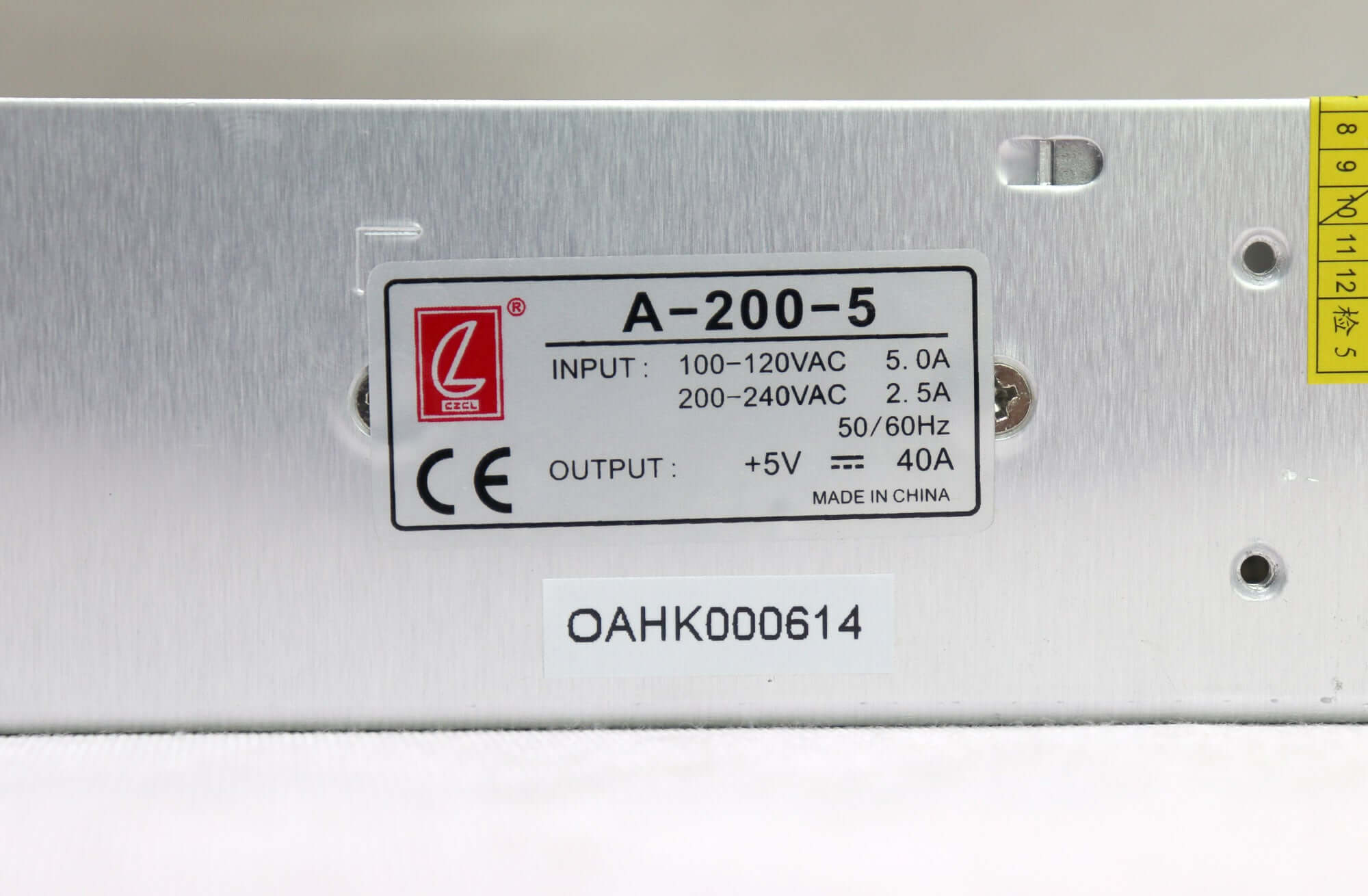
Give the supplier the documented range of the feed serving that cabinet. A project can contain several electrical distribution arrangements, so use the cabinet’s design record or ask a qualified technician to confirm it. Compare that range with the nameplate and instructions for the exact supplied unit. In a CZCL A-200W-5 Case 808 vs 812 review, the country or shipping address is too broad a basis for choosing the input option.
Suppose the cabinet is documented for a nominal 120 V AC feed. The Case 808 range starts at 176 V AC, so you can rule that listed unit out for the example feed. The Case 812 listing shows a 100–120 V AC option. Have the supplier confirm that option on the offered unit and have the technician check that the installation’s permitted supply conditions fit the exact documentation. The example resolves which listing to investigate, while the nameplate and cabinet record determine what can be approved.
For a documented 230 V AC cabinet feed, the nominal value falls within the Case 808 listed range and the Case 812 listing’s 200–240 V option. Verify the full documented supply range and the offered alternative’s exact variant before approving it. A catalogue line offering two ranges does not resolve whether the unit comes configured for one option or uses a selector. Ask the supplier to identify how the exact shipped part is specified, then let the technician follow the manufacturer’s instructions and cabinet procedures.
02. Check the continuous output where the unit will operate
At the nominal rating, 5 V × 40 A equals 200 W. Treat that as the nominal calculation. For a CZCL A-200W-5 Case 808 vs 812 substitution, ask what continuous output the chosen version can supply at the planned input, expected internal temperature and mounting arrangement. Check the original cabinet design for allowances and protection. A qualified technician should assess startup behavior and other loads on the same branch. The current label alone cannot settle the capacity needed by an installed cabinet under all conditions.
For example, suppose a cabinet’s documented sustained branch load is 30 A, and the project requires at least 10% margin above it. The resulting minimum is 33 A under the installed conditions. If the supplier confirms 32 A continuous for an alternative at the cabinet’s actual input and temperature, that proposed unit misses the sample project’s requirement by 1 A even if 40 A is printed on its nominal label. These are illustrative figures. Apply the cabinet’s approved margins and the manufacturer’s actual limits to your order.
For a repair following repeated failures, add the technician’s service findings before treating the part number as the whole problem. Ask which cabinet conditions were checked and whether the last replacement corresponded to the approved unit. The buyer can keep the supply order separate from the diagnostic work, with the cabinet’s approved conditions attached to the request. That means the vendor can respond to the exact part and the technician can address the cause of failure independently.
4. Write the substitution decision into the purchase order
01. Set out which case the supplier may ship
On a confirmed repair request, write an unambiguous order line with the full part number, case, input option and cabinet revision. If the job requires a specific version, ask the supplier to quote that version explicitly. Keep the approved drawing and nameplate photo with the line. The CZCL A-200W-5 Case 808 vs 812 comparison matters most when a substitute may be picked against the shared model string. The receiving team needs enough detail to spot the different part before opening several cartons.
For a hypothetical multi-site order, suppose a contractor needs four approved Case 808 units for one 230 V AC installation and two separately approved Case 812 units in the 100–120 V option for a second installation. Quote and pack them as separate lines with the actual site and cabinet revisions. If the supplier needs to consolidate those quantities for shipping, ask them to keep the line labels visible. A service shelf is easier to use when each bin gives the exact use case for the stock it holds.
| Champ | Citez des preuves | Vérification d'acceptation |
|---|---|---|
| Part and case | Full nominal model, Case 808 or 812, manufacturer label or matching paperwork. | Compare the carton and unit labels to the approved order line. |
| Option de saisie | Exact offered AC rating and the matching specification for that part. | Match the label to the documented cabinet feed before handing the part to the technician. |
| Forme | Drawing revision with dimensions, holes, terminals and specified clearance. | Verify the supplied sample in the actual cabinet through the approved service procedure. |
| Les conditions de travail | Supplier’s continuous-output limits at documented input and ambient conditions. | Qualified technician checks the representative installation under approved conditions. |
| Substitution decision | Named approved change with the offered model and actual cabinet revision. | Hold parts with a different case or rating for review before allocating them across jobs. |
02. Keep one accepted sample with the engineering record
When a substitution needs engineering approval, arrange for the technician to evaluate one sample before releasing the batch. Document its actual model, case, rating and approval scope. Record the cabinet drawing, context of the fit check and operating conditions considered by the technician. If the quote changes between sample and production, ask which part changed and get the affected constraints reviewed again. A good sample record makes repeat orders possible without relying on a catalog photo from the previous order.
When the sample and the remaining units ship separately, give the receiving department a copy of the approved nameplate photo. Ask them to verify the labels against the approved order before dispatching parts to a field team. If a carton is marked only A-200W-5, use the itemized packing record and the supplied unit label to confirm the case and input option. Hold any mismatch for clarification so a technician does not discover it during a scheduled service visit.
5. Check nearby CZCL part names before ordering
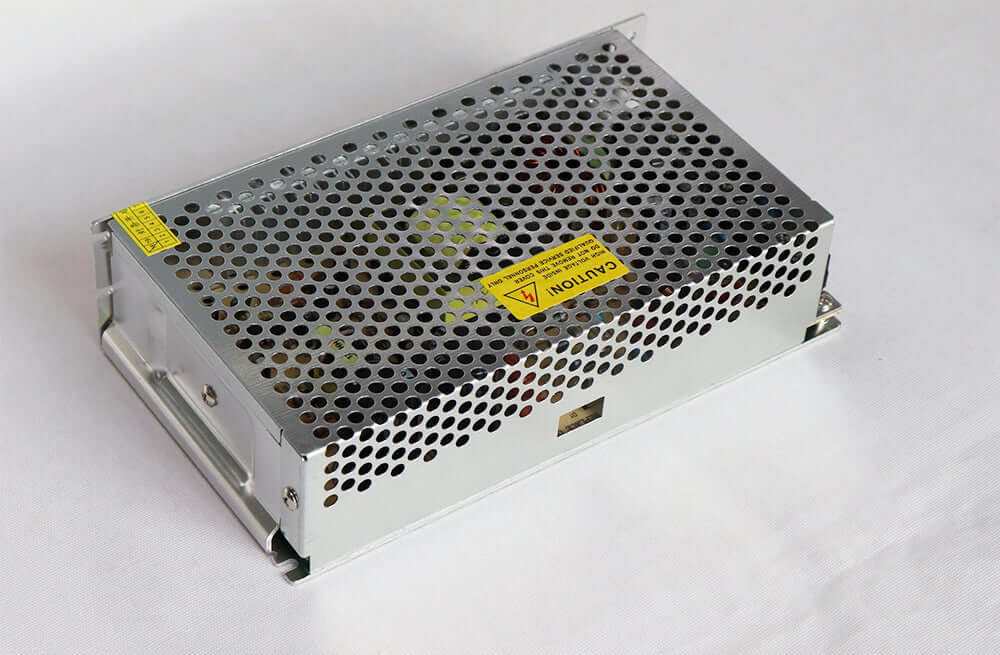
Le CZCL product catalog includes other supplies with similar output figures. Preserve the exact designations you find on the label when requesting a CZCL A-200W-5 Case 808 vs 812 quote. If the code you have is A-200AF-5 or has another suffix, use its own listing and matching documentation. The model string is important even when a second product photo has the same nominal output printed on the cover. Ask the cabinet supplier how a proposed part was approved and whether the original electrical and mounting restrictions still apply.
For a multi-brand maintenance shelf, use distinct bin labels for the cutout and input variants. Keep a reference label photo for each variant and attach it to the approved parts list. If the original case is unreadable, find a documented identical cabinet revision and send that nameplate together with photos of the mounting and harness. Ask the cabinet maker to confirm whether those records describe the expected spare for the affected position. A vendor can then check the actual case and input under the shared model name.
Keep any other DC voltage family on a separate quote request. If the supplied photo shows a different DC rating, ask the technician to identify the branch requirement and the devices fed by it before using either product page to place an order. For this 5 V case selection, keep the focus on the correct package, input rating and approval for the existing cabinet.
Foire aux questions
Can I order an A-200W-5 by the model name alone?
Include the case and actual input option. A CZCL A-200W-5 Case 808 vs 812 quote has to identify which part will ship, even though both listings give 5 V and 40 A.
Does 50 mm height mean the cases are interchangeable?
The widths and lengths differ. Compare the fixing pattern, terminal location, installed cables and service access against the drawing for your cabinet.
Is there a single Case 812 unit for both input ranges?
The listing presents 100–120 or 200–240 V AC. Ask the supplier to identify the exact supplied input version and its documentation. A qualified technician should verify the unit against the actual cabinet feed.
Can the 200 W figure stand in for current at high cabinet temperature?
Use the manufacturer’s applicable operating limits and have the technician check the cabinet’s temperature and installation conditions. The nominal output figure alone does not quantify the usable continuous output in a hot cabinet.
What should I send if I only have a Case 808 photo?
Include the full old nameplate, the cabinet ID and revision, the documented site feed and a photo of the installed mounting and connections. If any detail is unreadable, the original parts list can help identify the correct spare.
Can I keep one case as the spare for both cabinet generations?
Use a common spare only after the cabinet maker has approved it for both generations and the warehouse team can identify the exact model and input option. Where approvals differ, store each version under its own cabinet record.
Request the case and input option on the same quote
Send LED-Mall the complete nameplate, case code, cabinet revision, mounting limits, documented AC feed and the number of units. For a CZCL A-200W-5 Case 808 vs 812 decision, ask for the offered case, input option and matching document on the same quote. Ask LED-Mall to confirm the exact supply before ordering an alternate for a cabinet whose original part has not been identified.