
Ιστολόγιο LEDMall
Χωρητικότητα pixel DIS-300: Οκτώ έξοδοι σημαίνουν περισσότερα pixel;
Νοέμβριος
DIS-300 pixel capacity follows the incoming signal limits, not the number of output sockets. NovaStar’s V1.2.1 specification lists up to 650,000 pixels per input and up to 1,300,000 pixels in total for the two-input mode. Eight distribution outputs do not create eight new input budgets.
For a project buyer comparing a distributor with additional sending outputs, that distinction changes the equipment list. More branch connections may help distribute an existing signal, while a larger independent image still needs sufficient source and sending capacity. The two requirements should appear separately in the proposal.
The figures here come from the DIS-300 Ethernet Port Distributor Specifications V1.2.1, released December 11, 2023. The examples are hypothetical budget checks, not tested installations or approval of a particular screen configuration. Confirm the proposed signal chain before ordering.
1. Read the DIS-300 pixel capacity from the input side
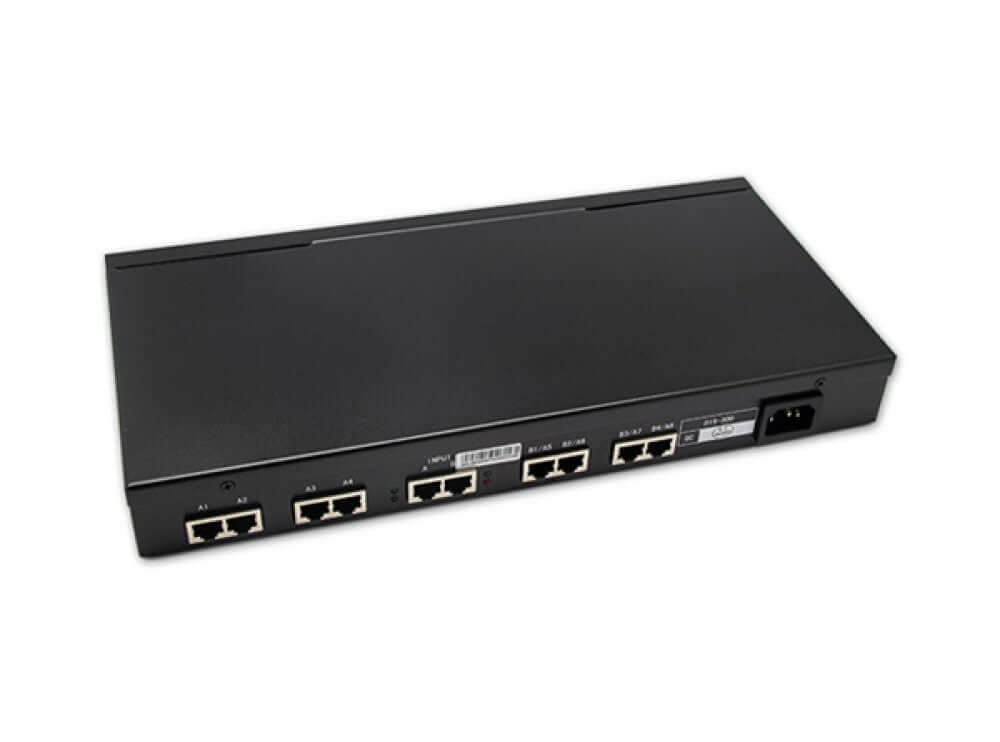
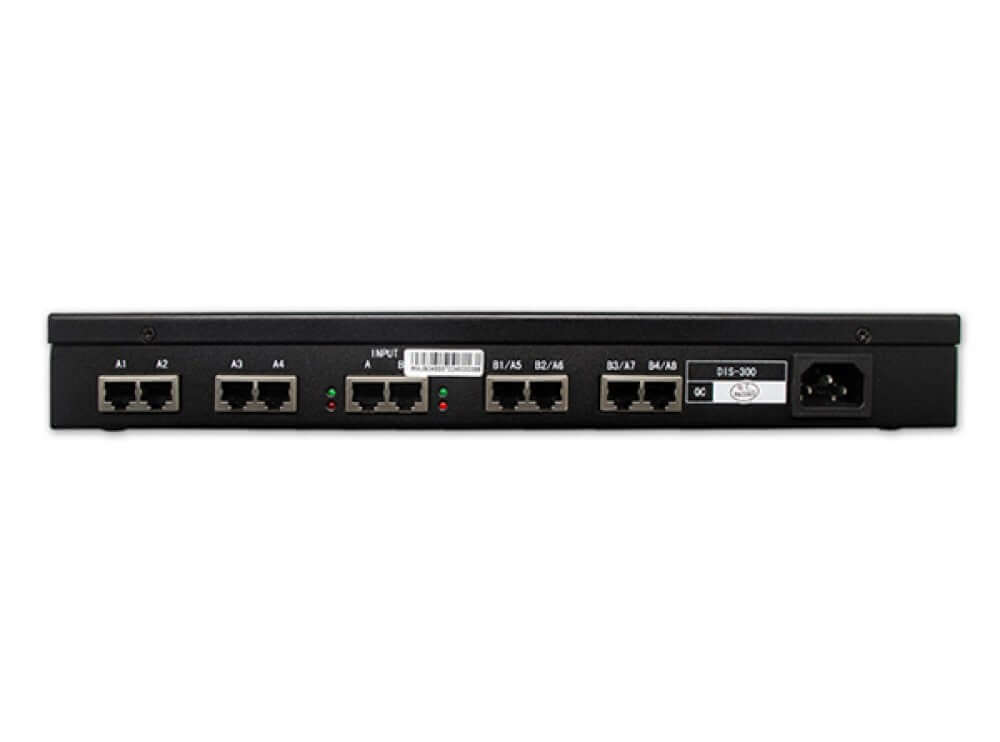
The manufacturer describes two working modes: one input distributed to eight outputs, or two inputs distributed to two groups of four outputs. In the first mode, input A corresponds to A1 through A8. In the second, A corresponds to A1 through A4, while B corresponds to B1 through B4.
Read DIS-300 pixel capacity alongside that mapping. The documented output capacity of up to 650,000 pixels per port is not a statement that every output receives a separate additional source canvas. Keep the incoming data budget distinct from the number of physical branches carrying it.
| λειτουργία εργασίας | Input-side ceiling | Documented output mapping | Επιπτώσεις αγοράς |
|---|---|---|---|
| 1 μέσα, 8 έξω | Up to 650,000 pixels on input A | A to A1–A8 | Eight branches do not multiply the input budget. |
| 2 μέσα, 4 έξω | Up to 650,000 pixels per input; 1,300,000 total | A to A1–A4; B to B1–B4 | Check each input separately, then check the combined load. |
This is a distribution decision, rather than a reason to multiply the advertised branch count by the per-port number. If a project needs more independent source data, ask where that additional data will originate and which sending outputs will carry it. A drawing with more downstream connectors does not answer those questions.
2. Check two proposed input allocations
Consider a hypothetical two-input design with 480,000 pixels assigned to A and 520,000 assigned to B. Each figure is below the published per-input ceiling, and the combined count is 1,000,000. That passes this simple input-count screening against the cited limits.
It does not approve the whole installation. The source equipment, sending configuration, screen geometry and receiving-card arrangement still need to match the proposed design. Treat the calculation as one clearly labeled checkpoint, not a substitute for the supplier’s configuration review.
Now consider another hypothetical allocation: 700,000 pixels on A and 100,000 on B. The total is only 800,000, but A exceeds the cited 650,000-pixel input limit. Unused allowance on B does not make that proposed A allocation fit the published per-input figure.
When budgeting DIS-300 pixel capacity, write both input loads in the equipment schedule. A single combined total can hide an overloaded input. If the supplier proposes reallocating the image, request the revised source and receiver mapping rather than approving a change based only on the new total.
Also separate unique image data from repeated distribution. Reaching several screen paths with the same incoming data is a different requirement from creating additional independently addressed image area. Receiver allocations and the content plan determine what each branch should show; the number of branch connectors alone does not establish either requirement.
DIS-300 pixel capacity should therefore be checked before deciding how many distribution units to buy. Adding another distributor without revising the upstream design is not evidence that the original source can supply more independent pixels.
For a hypothetical group of signs repeating one image, the physical pixel count across all signs can exceed the unique image area supplied upstream. This is why adding every installed screen area without the content plan can mislead the buyer. Record the physical display total and the unique input allocation separately, then ask the supplier to confirm how the proposed distribution implements that particular repetition.
3. Compare the actual signal requirement
Ask the project team to describe the desired pictures before comparing hardware quantities. Are the branches intended to carry repeated content, separate regions of a common image, or independently supplied content? Put that requirement on the layout drawing so that a distributor and a controller are not quoted as though they perform the same task.
For DIS-300 pixel capacity, a useful proposal identifies the upstream sender, the signals assigned to inputs A and B, the selected working mode and each downstream branch. It should explain how the receiver configurations relate to the intended picture. A list containing only “eight outputs” leaves the most important source-side question unanswered.
The LED Mall DIS-300 product listing identifies the distribution hardware. Use that listing with an approved signal diagram, rather than treating the product name as a complete system design. Any quoted configuration work or additional sending equipment should be stated explicitly.
If the proposed link also includes a fiber converter, review that device’s mapping separately. Our CVT4K-M port-mapping explanation shows why optical grouping can have its own conditions. Its figures do not replace the DIS-300 input limits or establish compatibility between arbitrary devices.
When two proposals differ, compare what is actually supplied. One may cover signal distribution only, while another includes more source capacity, configuration and a documented acceptance test. The buyer needs those scope differences before comparing totals. No price assumption is necessary to identify an omitted requirement.
4. Keep the accepted mapping with the handover
Make DIS-300 pixel capacity part of the handover record through the actual input allocations and working mode. Retain the approved diagram, equipment identities, relevant versions and receiver configuration files. Label the branches in a way that the maintenance team can match to the installed screen paths.
Agree which source content and branch results must be demonstrated. A successful picture on one branch does not document every path in the proposal. The record should identify which branches were observed and whether their content and mapping matched the intended result.
Keep unresolved differences visible at acceptance. If a branch was not checked, mark it as unverified rather than copying the result from another branch. If the source allocation changed during commissioning, update the drawing and retain the final values that the demonstration actually used.
A later screen expansion needs the same distinction between input data and distribution paths. Additional cabinets may change the required image area, even if a spare physical connector is available. Compare the proposed allocation with the accepted record before assuming the expansion fits.
DIS-300 pixel capacity is easier to manage when that record travels with the project. The next technician should be able to see where the input budgets were checked and which branches belong to each group, without reconstructing the decision from cable counts or an old quotation.
Συχνές ερωτήσεις
Must every branch display an identical cabinet layout?
Do not infer the required receiver arrangement from the output count alone. Ask the integrator to document each branch’s approved mapping and intended content. Different cabinet arrangements do not create additional incoming data capacity, and the proposed combination still needs configuration confirmation.
Does input B automatically provide a backup for input A?
The cited specification describes the one-input and two-input distribution modes; it does not establish an automatic source-backup scheme. If redundancy is required, request the applicable manufacturer procedure, proposed signal paths and a separate acceptance demonstration.
Does receiving-card readback prove the load is approved?
No. V1.2.1 lists receiving-card data readback, but retrieving parameters is a different check from approving DIS-300 pixel capacity. Identify what was read back and compare the recorded allocations with the intended design and applicable limits.
Request a distribution layout check
Send the source and sender models, proposed working mode, input A and B pixel allocations, branch diagram and intended content through Σελίδα ερωτημάτων του LED Mall. Include any planned expansion. A DIS-300 pixel capacity review can then address the actual input requirement and the distribution work the proposal needs to cover.